Photo story
Microplastics in Postojna Cave: Another Month of Monitoring
On Friday, 4 September, I joined Raffaele Bruschi, Dr Blaž Kogovšek and Dr Magdalena Aljančič for a morning of work in Postojna Cave. As part of his PhD, Raffaele is investigating how microplastics reach caves through the air, move through them and settle. This visit was for collecting the samples and preparing the samplers for another month of measurements.
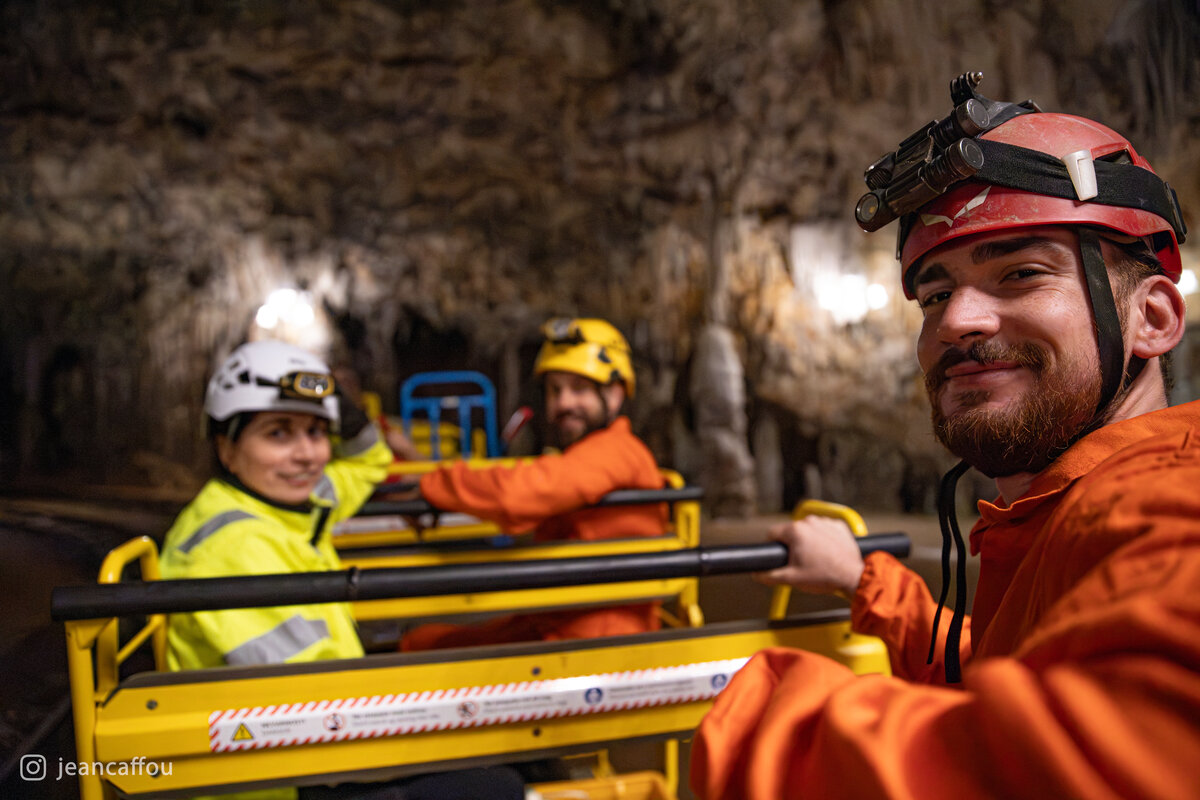
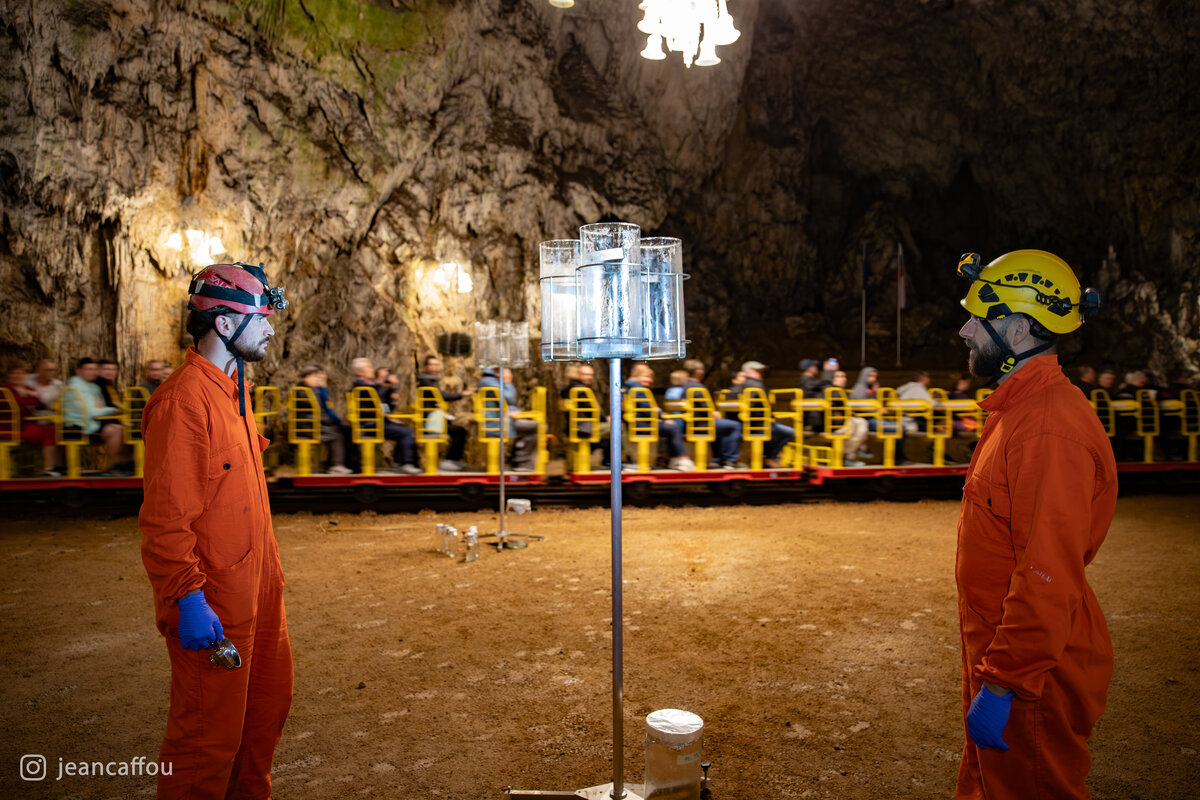
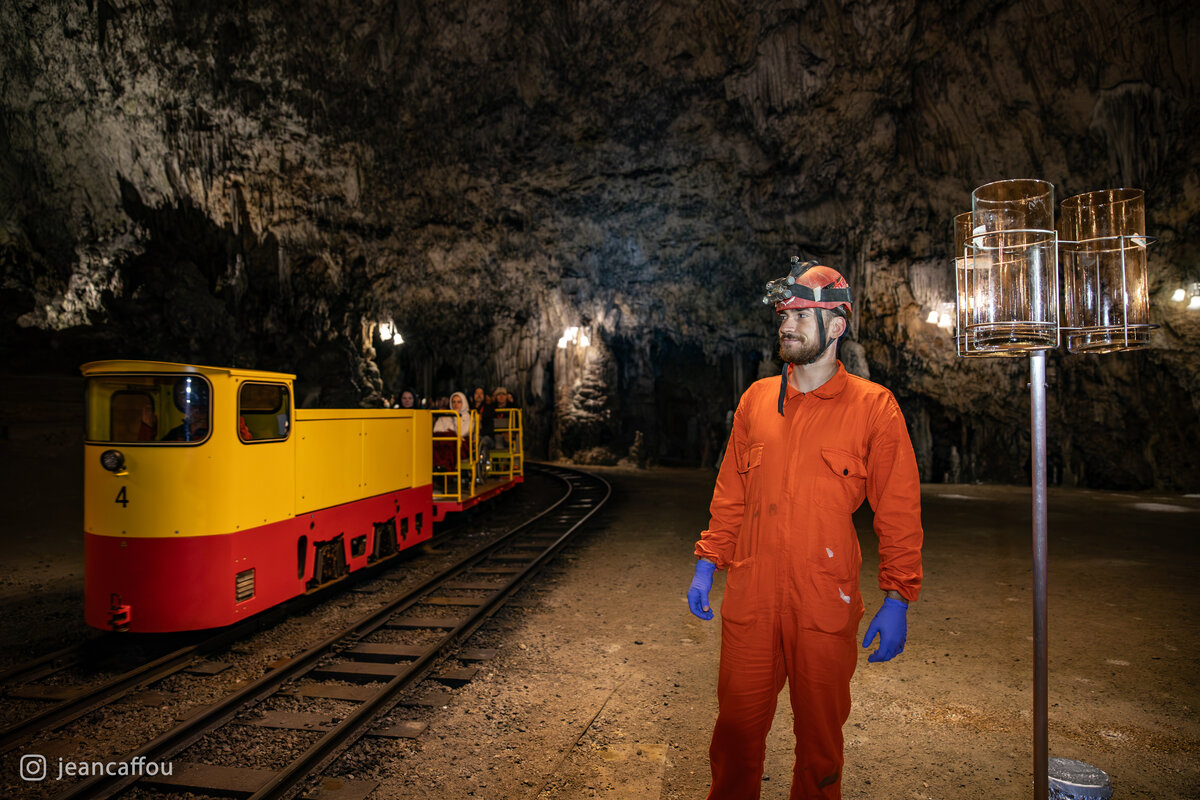
In their fluorescent-orange coveralls, Raffaele and Blaž looked ready to film a new season of Prison Break in Postojna Cave. The coveralls are made from pure cotton and limit the introduction of synthetic fibres from their everyday clothes. The bright orange colour also makes any stray cotton fibres from the coveralls easier to recognise in a sample.
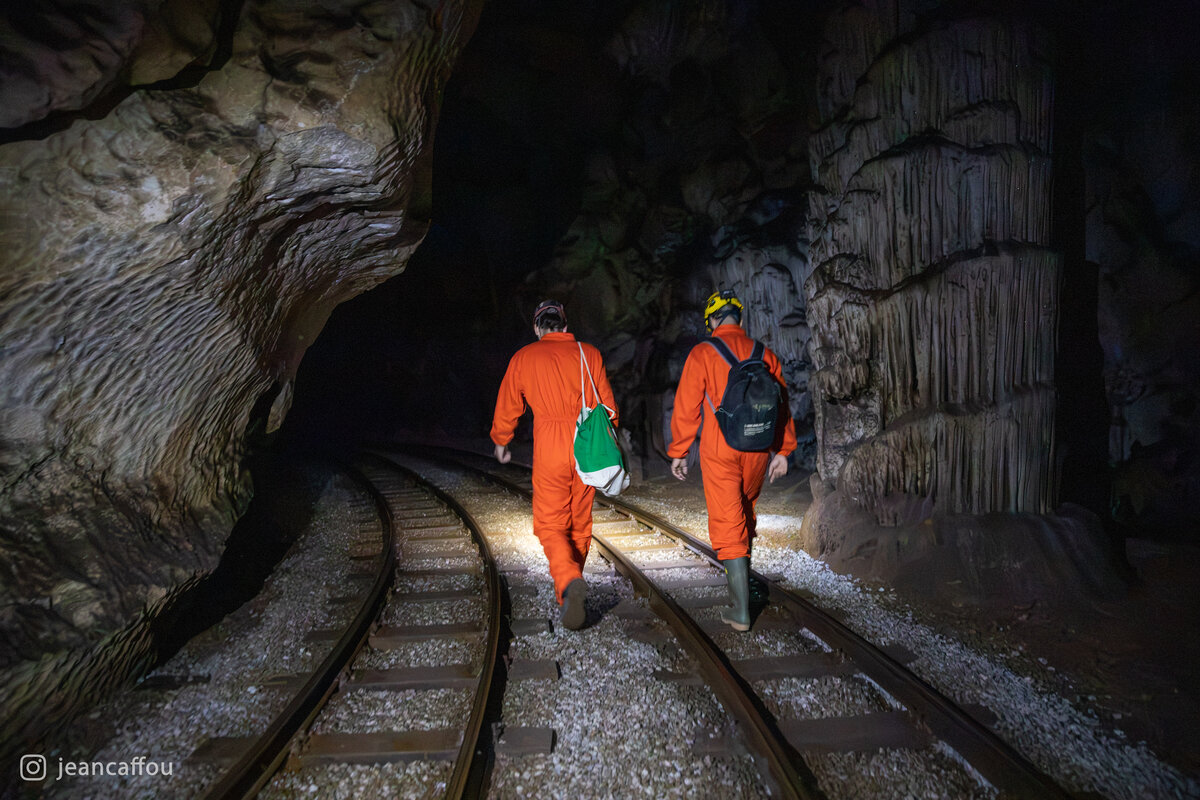
The cave train was part of our journey, and also one of the questions behind the research. Raffaele is looking at particles that go unnoticed on an ordinary cave visit. He wants to know whether their deposition differs between areas with a train, crowds of visitors and almost no regular tourist traffic.
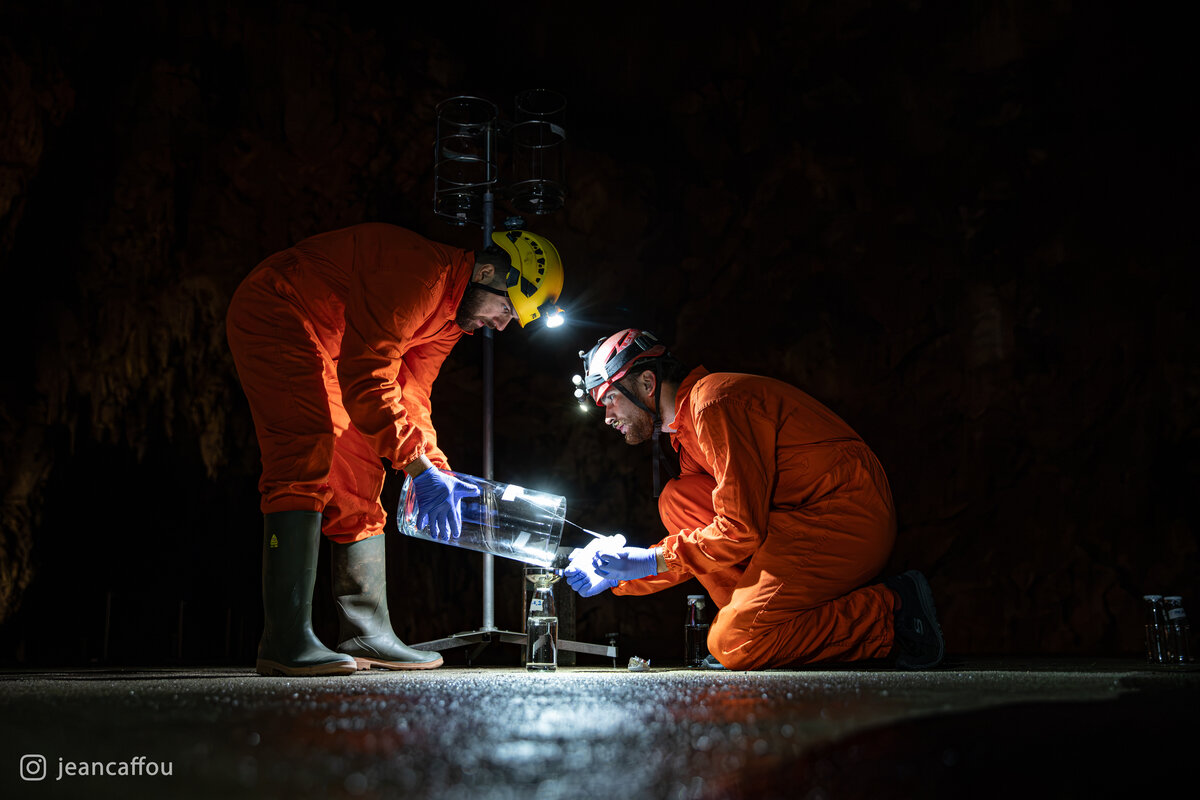
Another month in the glass collectors
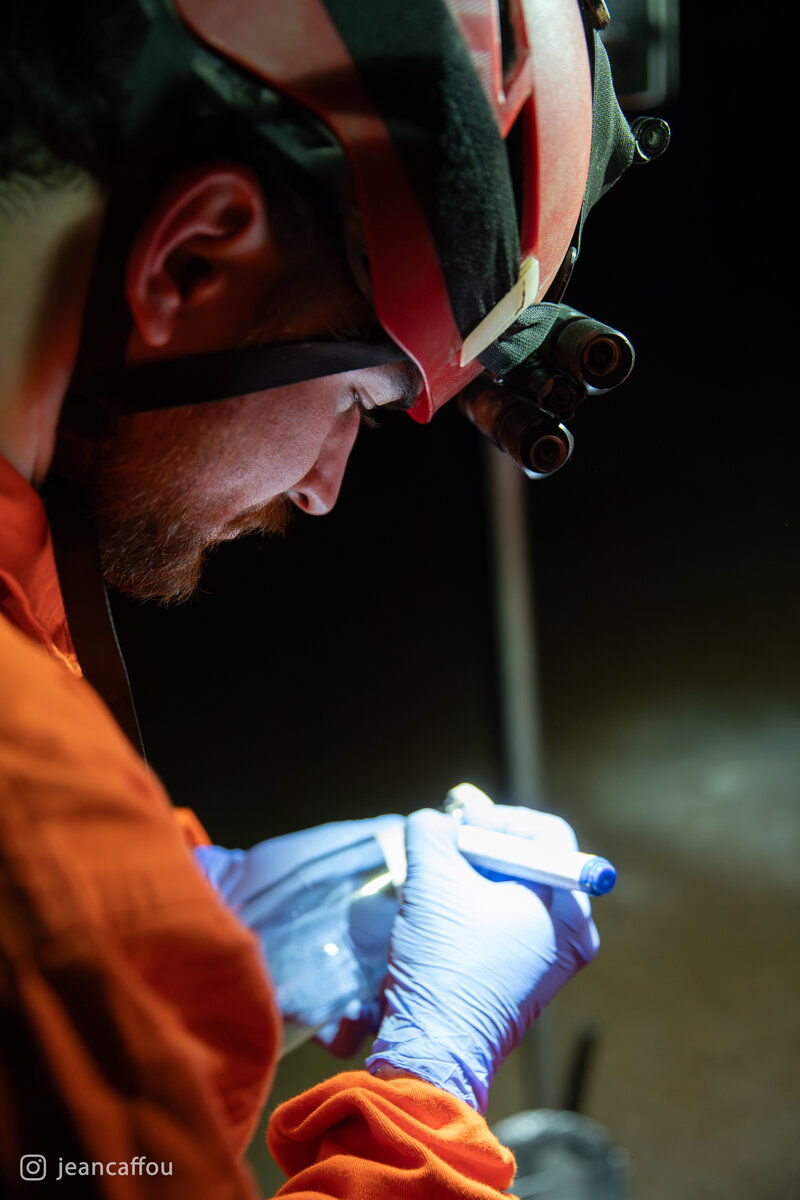
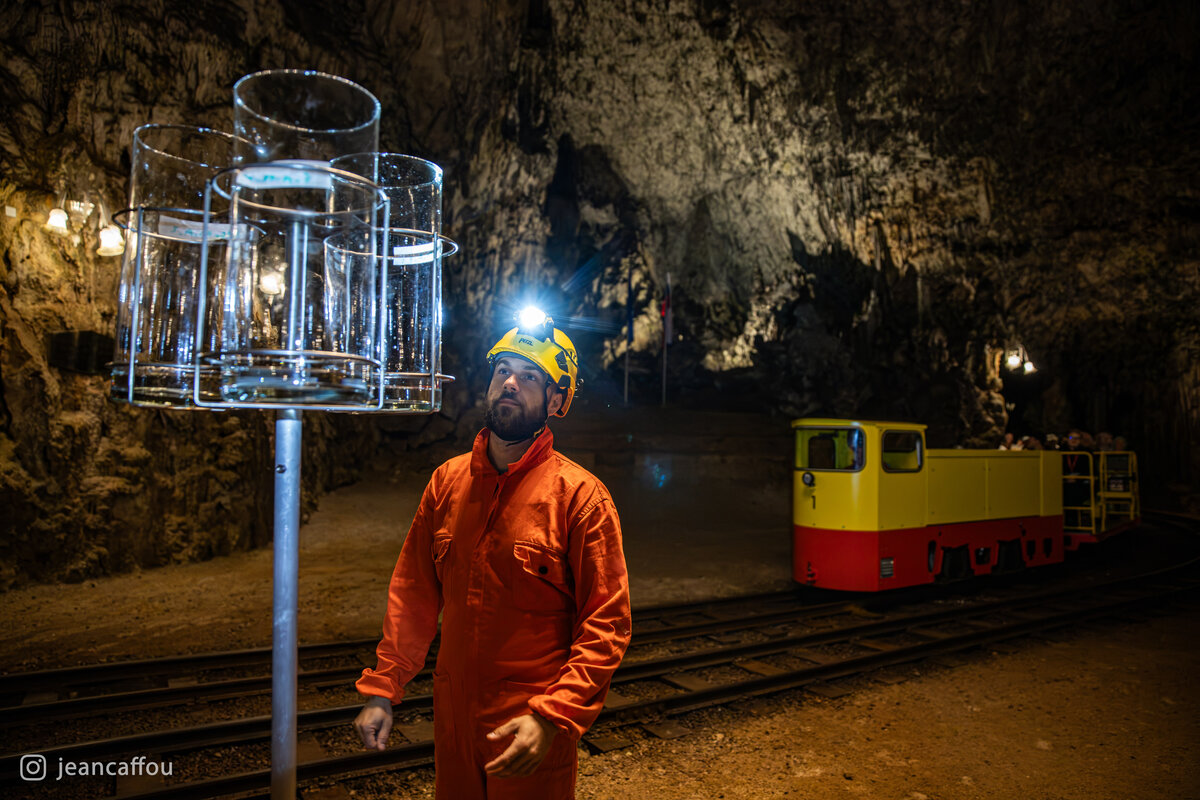
Blaž helped Raffaele change the water in the samplers and pack the collected samples. They arranged the glass containers beside the stands and got to work. In the light of their headlamps, even pouring water from one container into another showed how much care the job required.
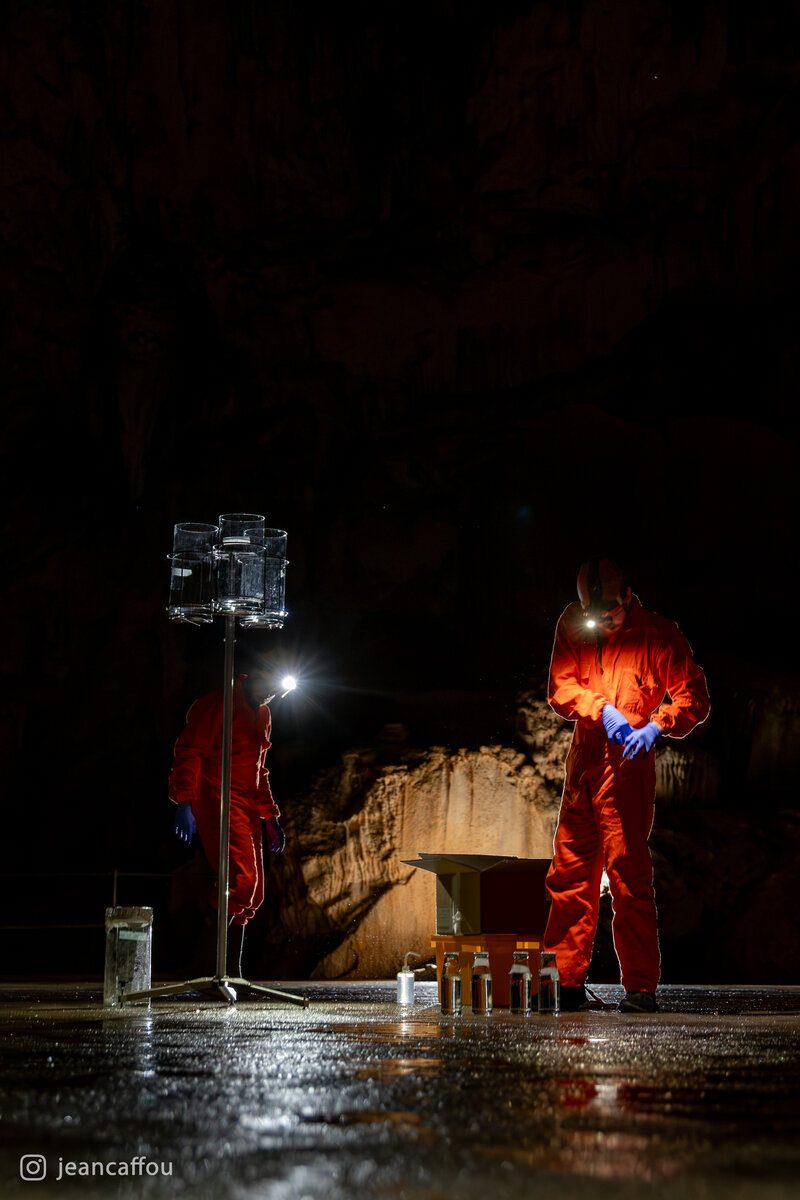
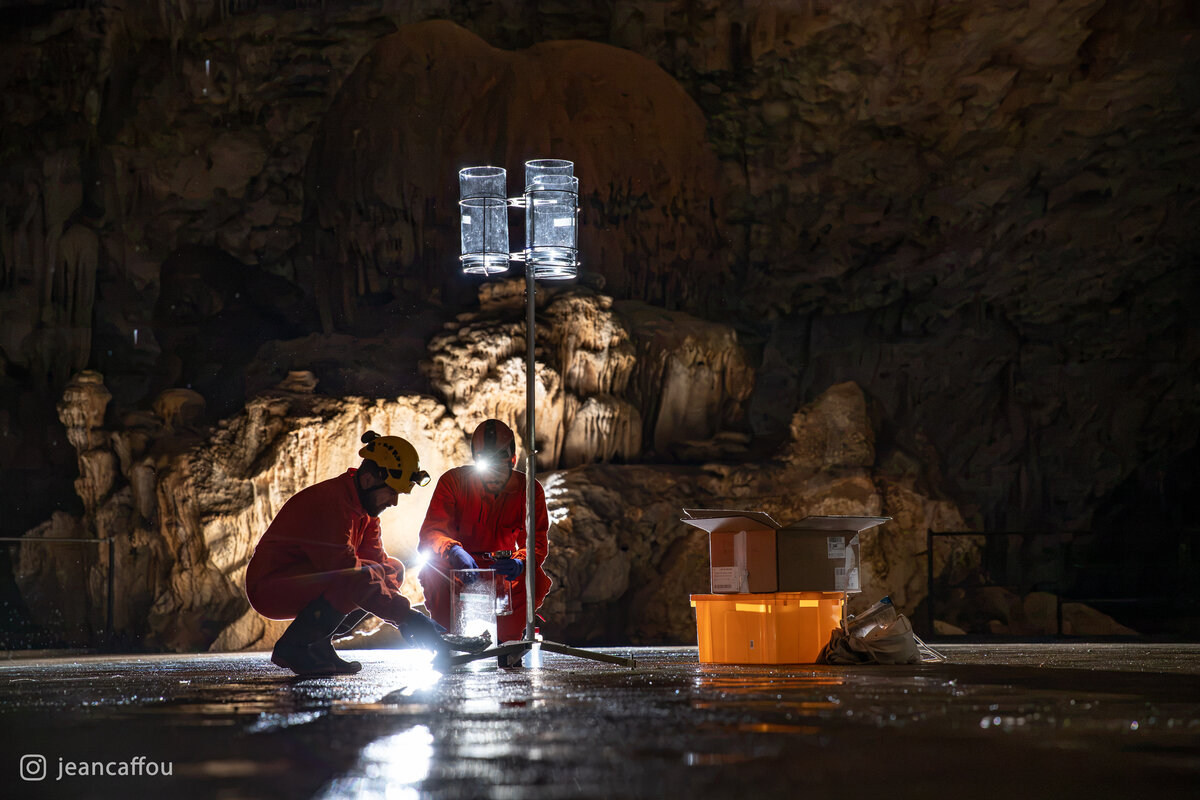
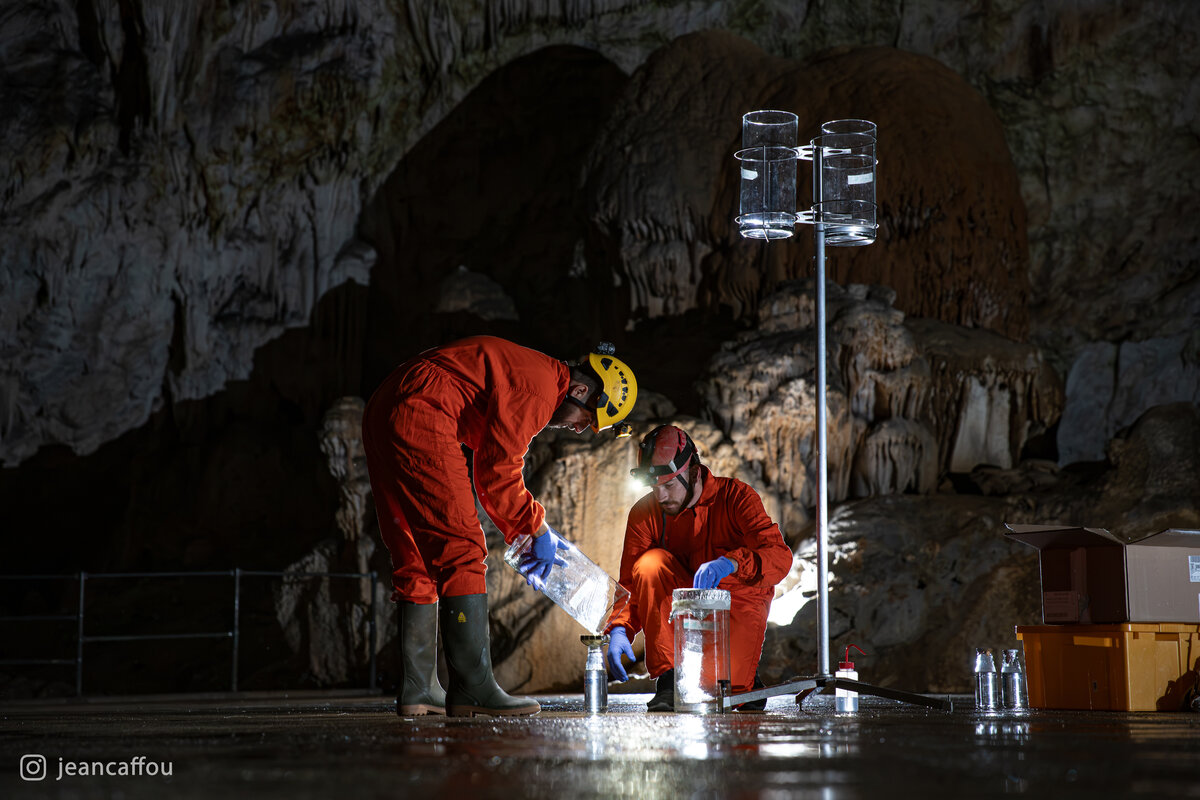
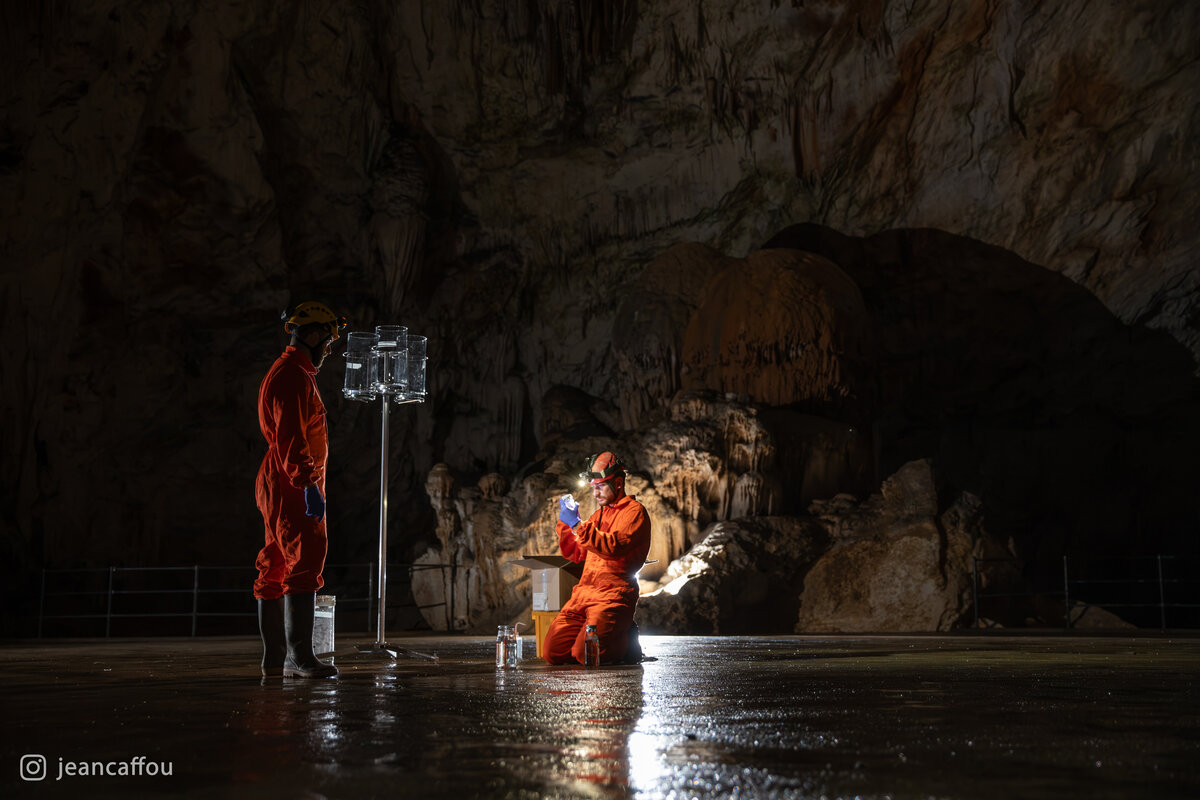
They also used powder-free nitrile gloves. These are made from synthetic rubber and help limit contamination while handling the samples. Their composition is known, so the laboratory can use infrared analysis (µ-FTIR) to check whether a suspect particle’s spectrum matches the glove material.
The coatings inside bottle caps can also contain plastic and introduce particles into a sample. Aluminium foil helps protect the samples from this contamination. Particles identified during analysis as coming from the cap coating can be excluded when interpreting the environmental sample.
Control samples, known as blanks, also help reveal contamination introduced during handling, transport and laboratory processing. Without these checks, particles from clothing, equipment or the sampling process itself could easily be mistaken for particles from the cave environment.
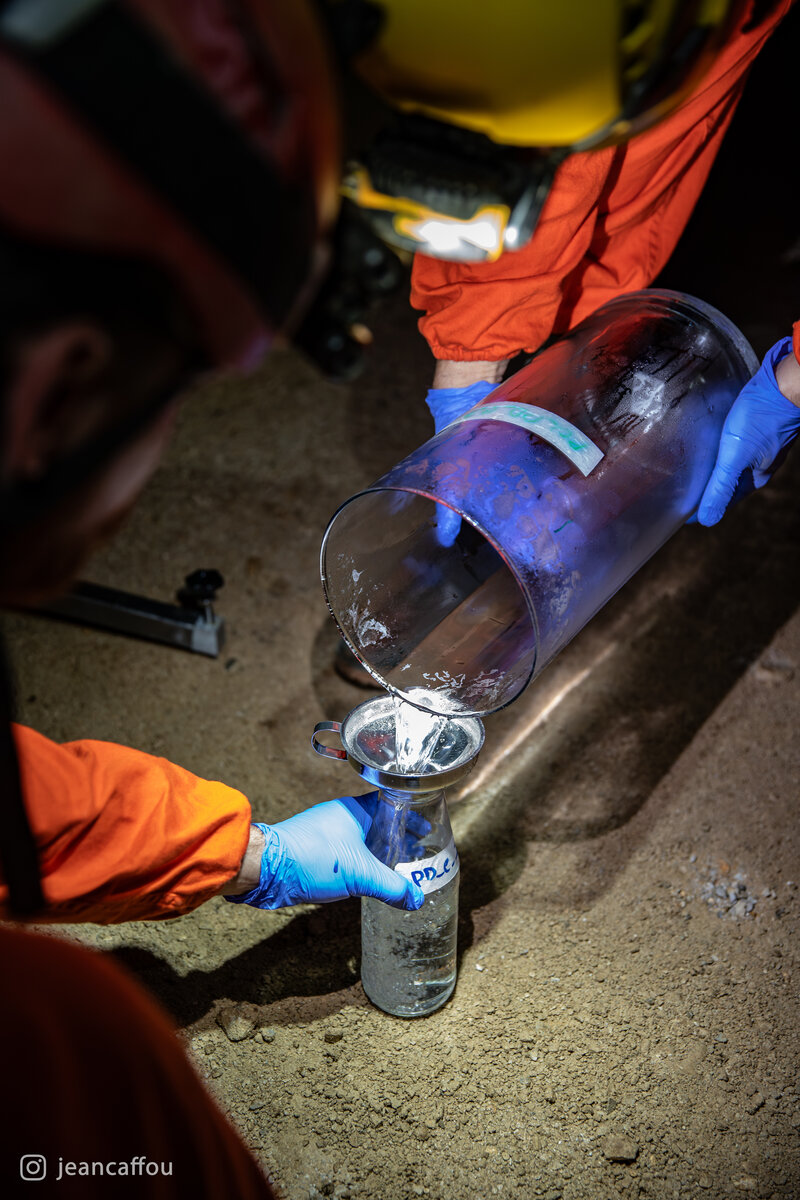
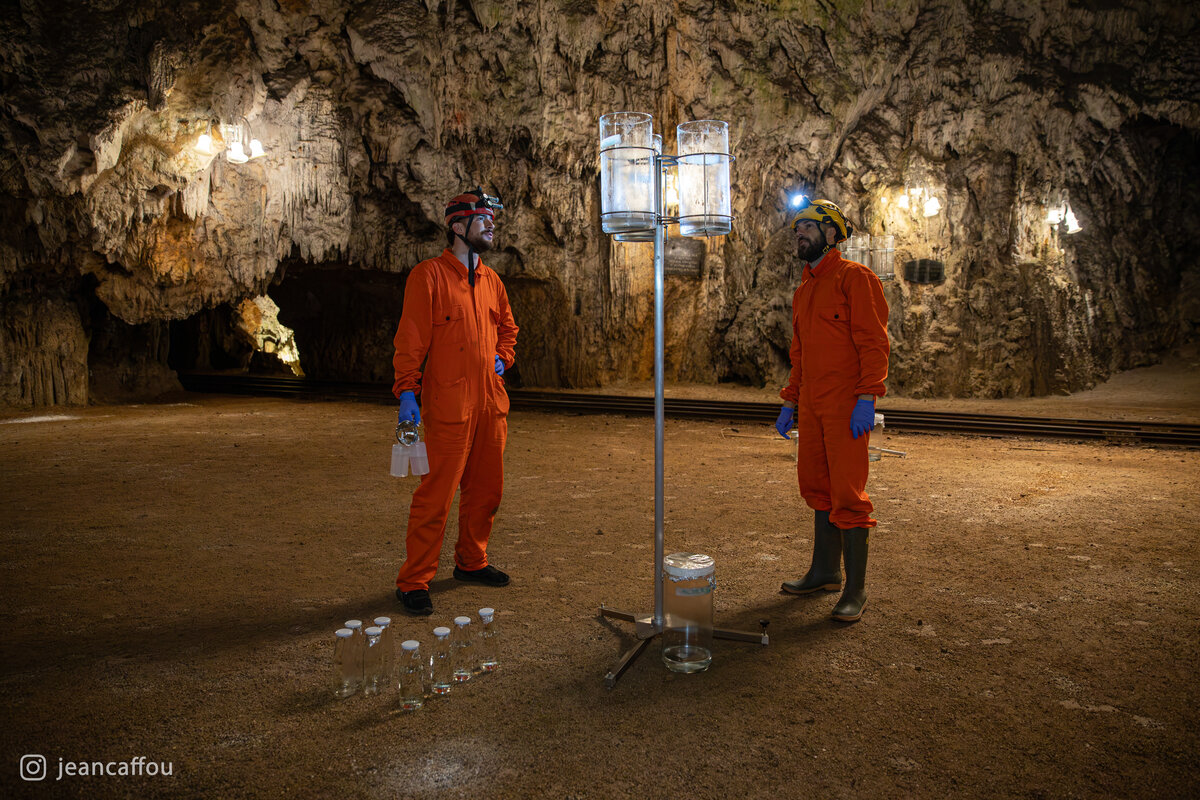
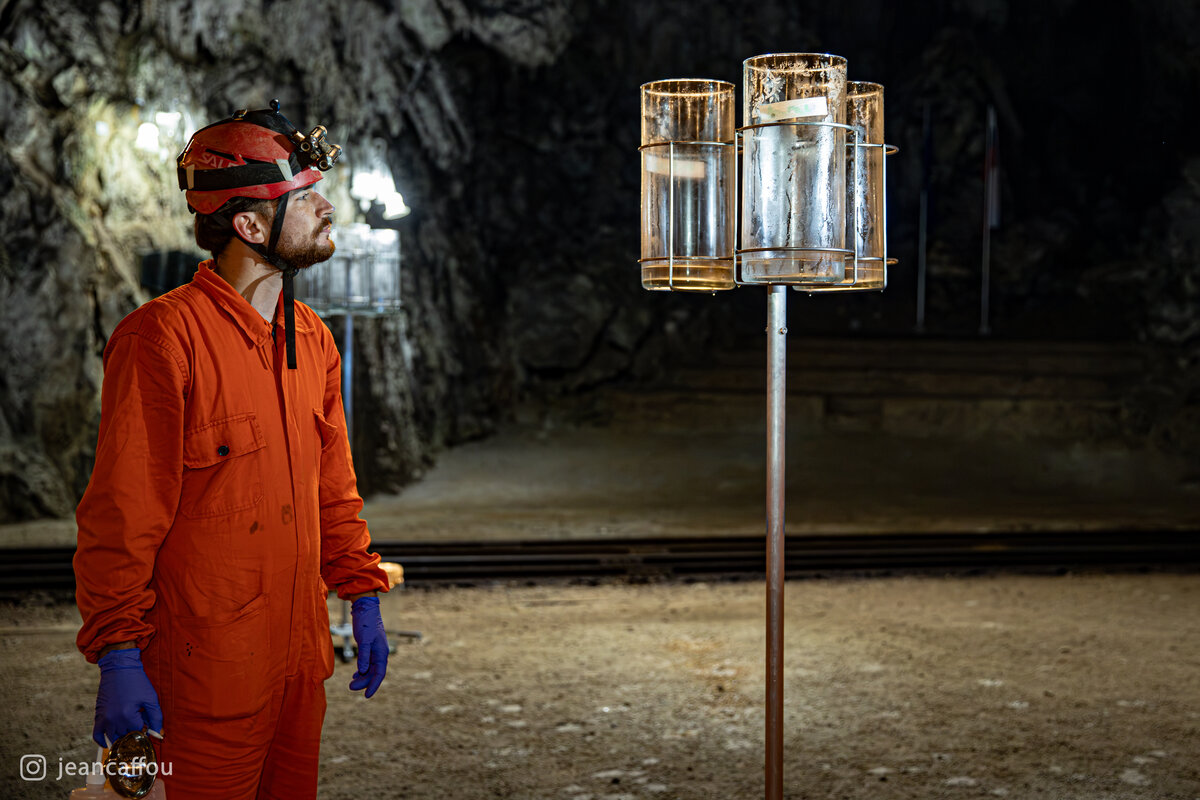
The passive samplers catch particles as they settle out of the air, recording deposition over time. Air currents can carry particles through the cave, while people and trains can stir settled particles back into the air. Apparently, even underground, dust does not necessarily get a quiet life.
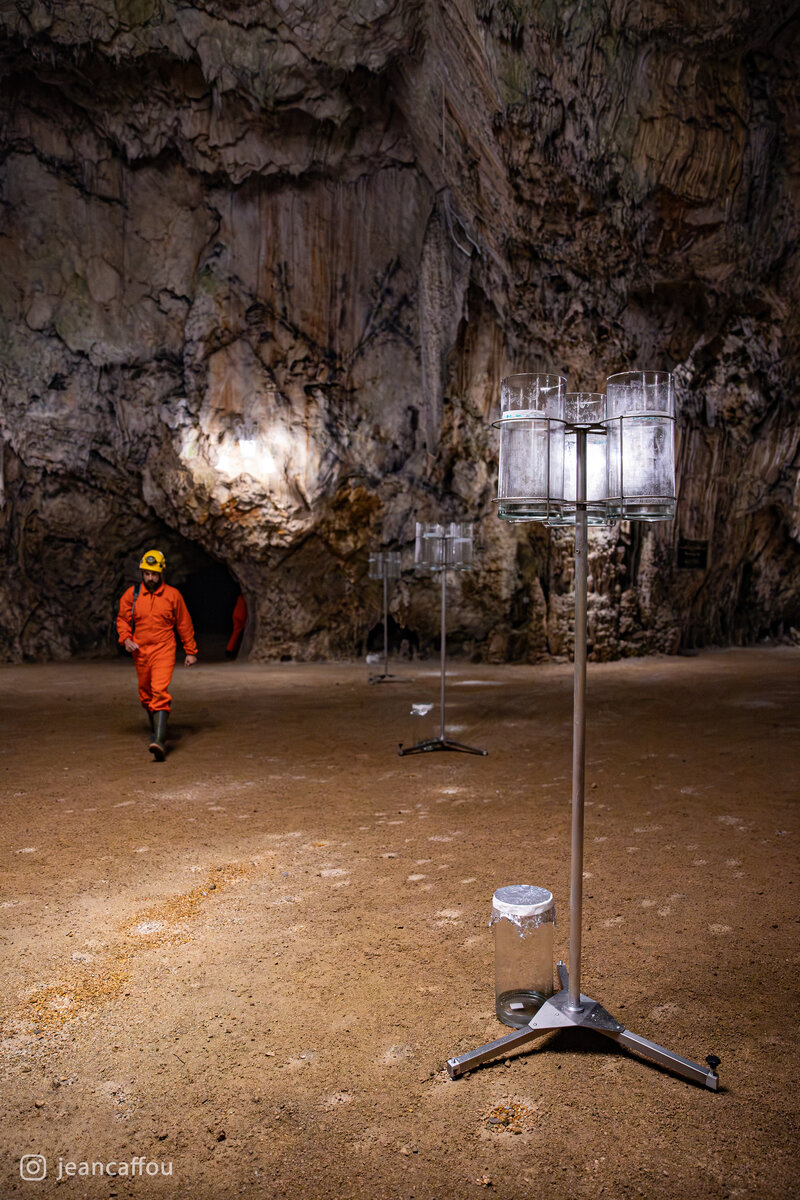
Raffaele and his collaborators are testing a new prototype adapted to cave conditions. Passage shape and ventilation can change considerably over a short distance, so a single sample can hardly tell the story of an entire cave. Comparing several positions helps make sense of those differences. The laboratory work will then establish which collected particles are plastic, what shapes they have and which polymers they consist of.
Three places in the same cave
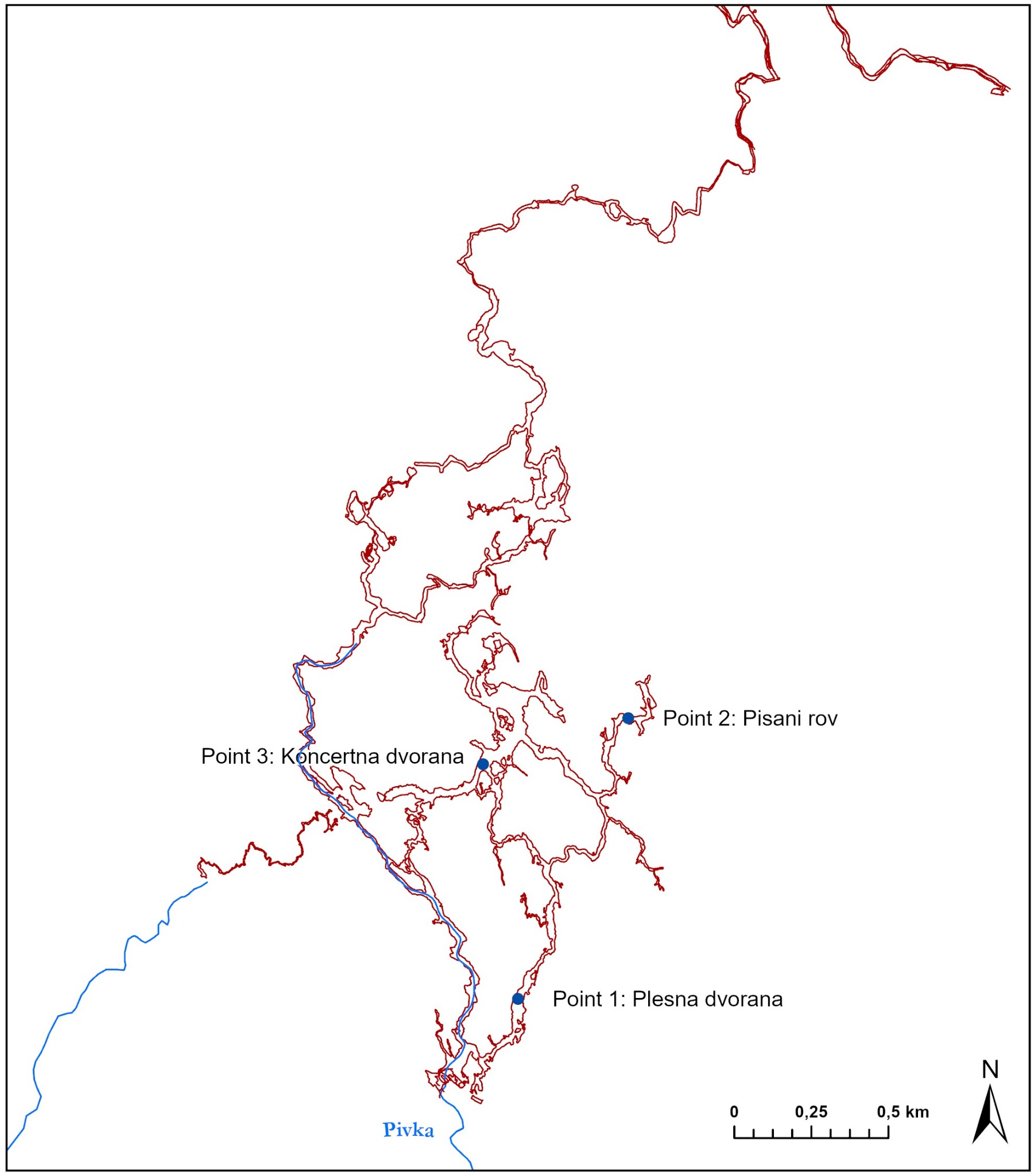
In Plesna dvorana, the Dance Hall, the samplers stand at different distances from the railway. Here the researchers are investigating the possible influence of the cave train and the air movement accompanying its passage. As we worked and I took photographs, yellow and red carriages carried visitors past us, while the collectors stayed in place.
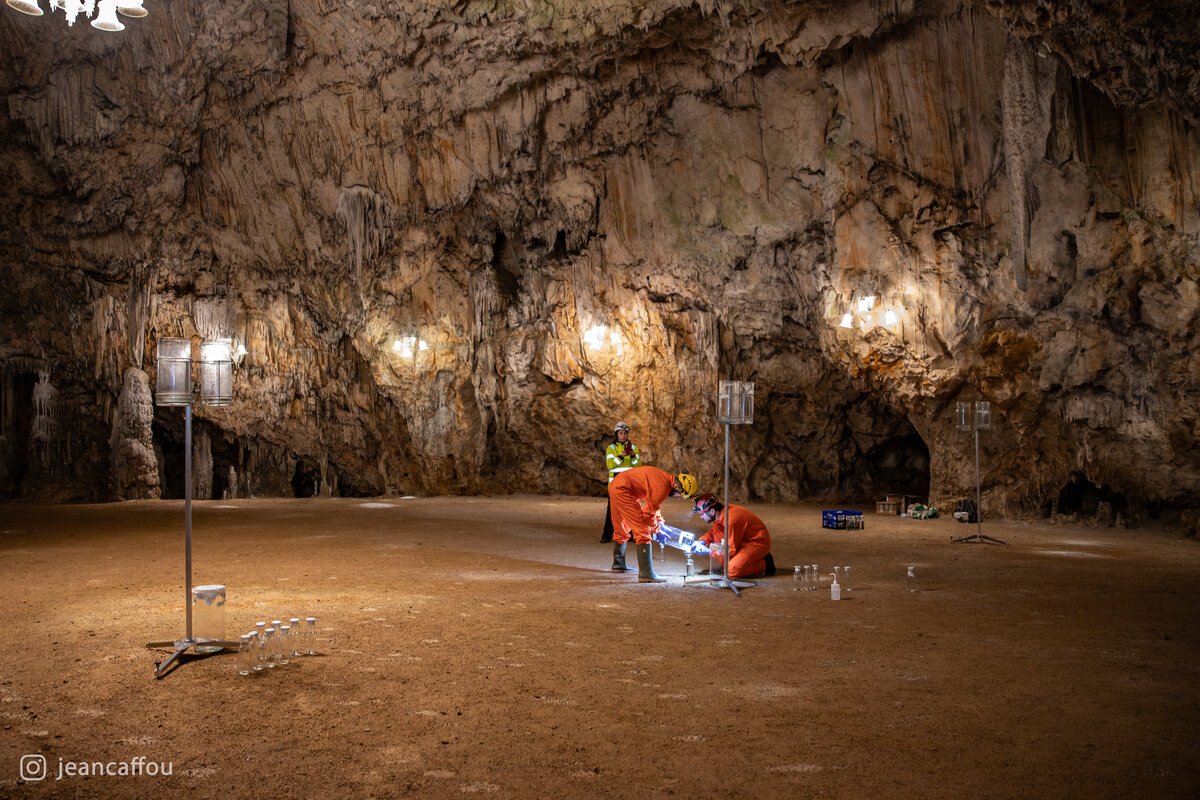
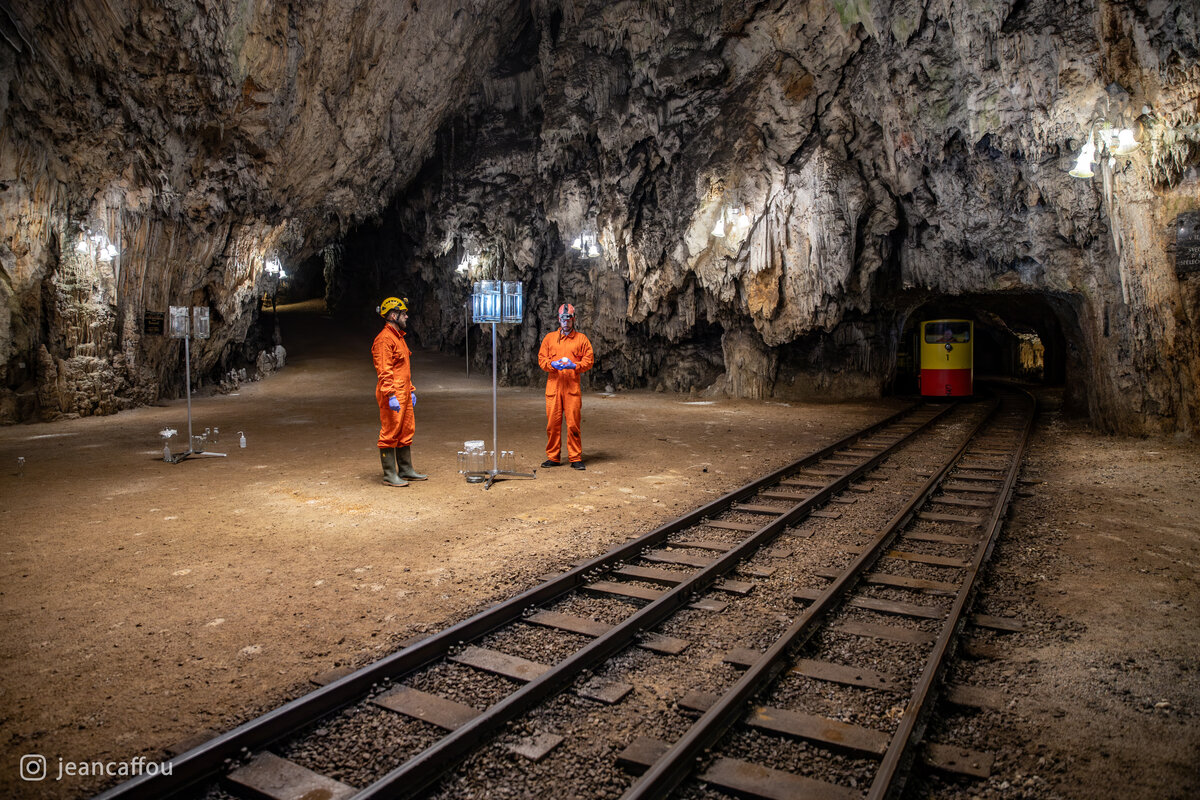
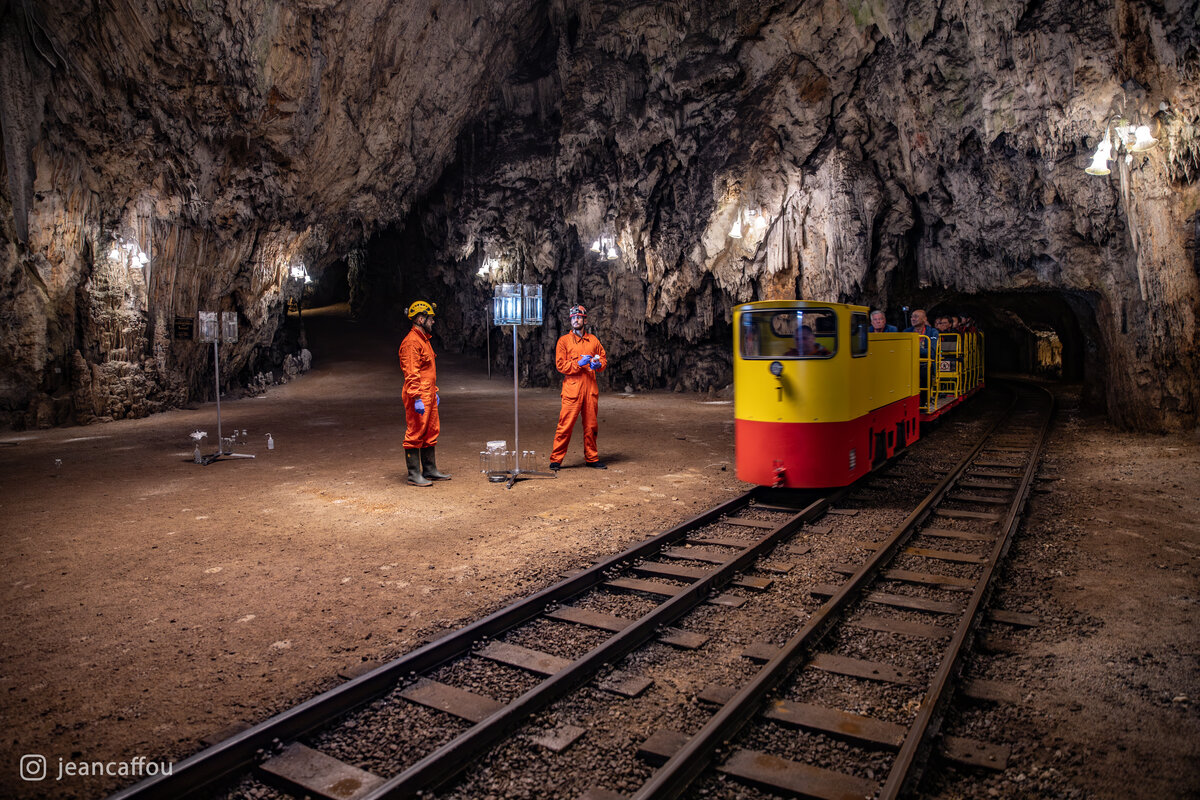
In Koncertna dvorana, the Concert Hall, the focus is on people walking and gathering in larger numbers. Pisani rov, a passage with almost no regular tourist traffic, provides a comparison with a less visited part of the cave. All three sectors belong to the same cave system, but the activity within them is quite different.
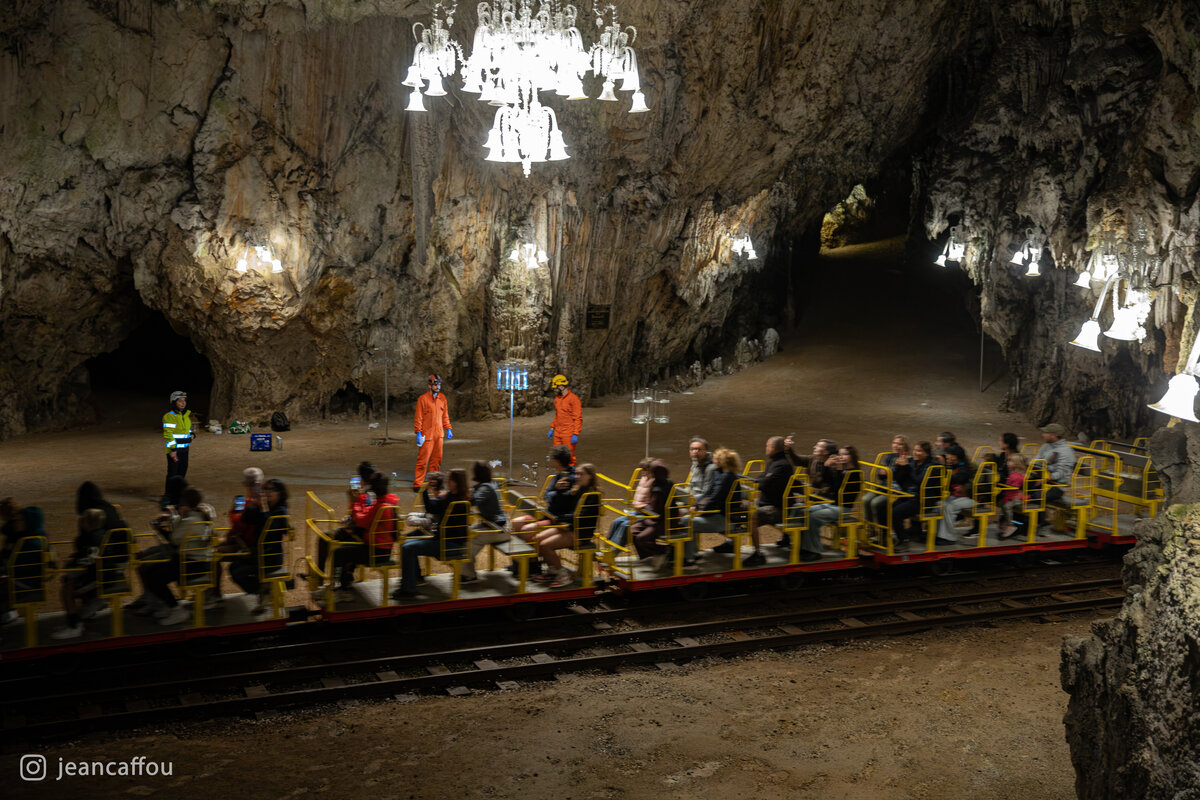
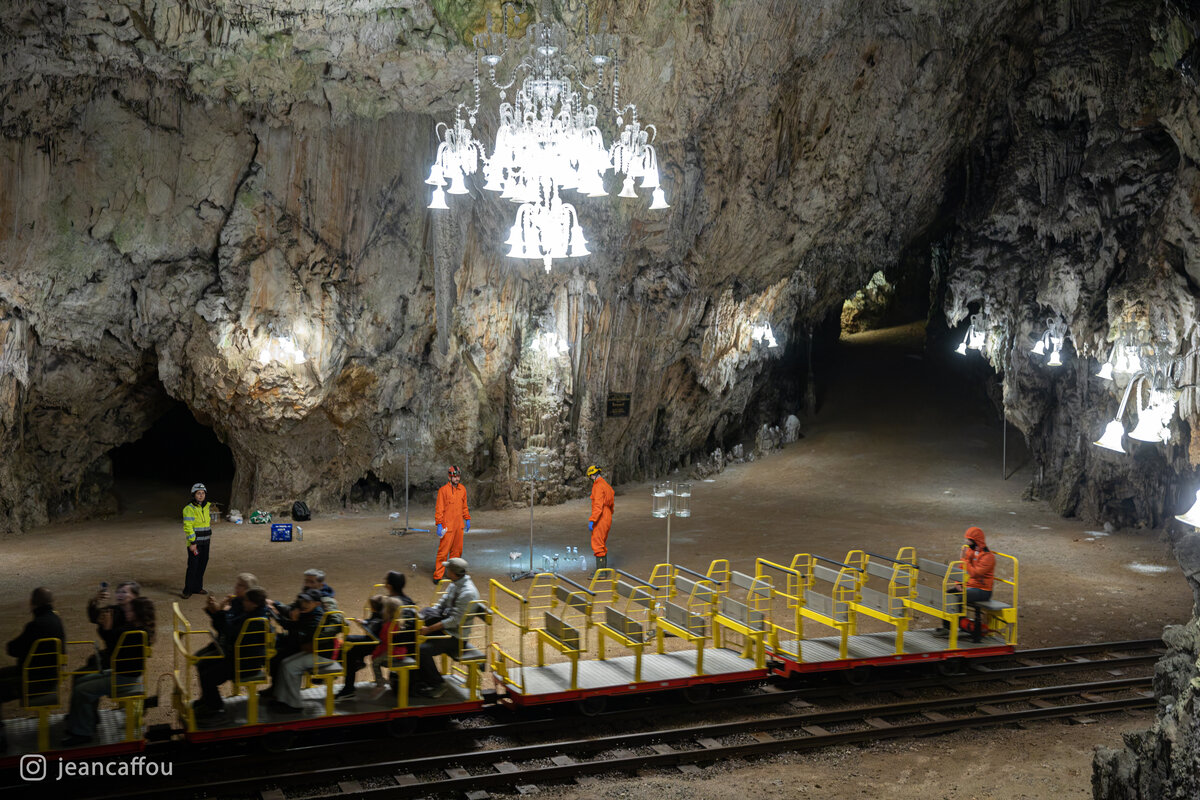
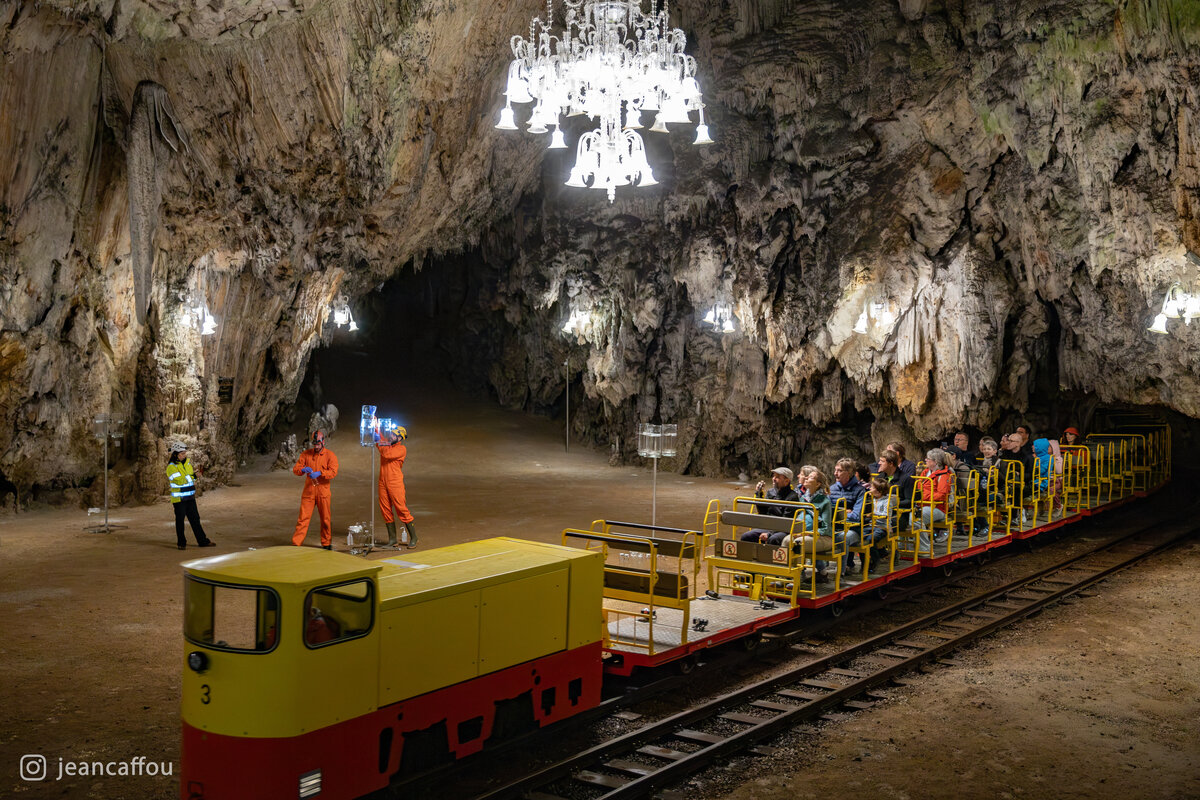
Monitoring is still underway and there are no results yet. Raffaele hopes to establish whether the quantity and characteristics of deposited microplastic particles differ between these settings, and how far any differences can be linked to visitors and the train. The work will also show how well the prototype performs inside a cave. The findings could help with cave conservation and planning similar monitoring elsewhere.
Work on both sides of the border
A considerable amount of shared work went into the collectors on their stands. Manuela Bisiacchi, Renzo Crevatin and Elvio Merlach at the University of Trieste helped turn the idea into a working prototype. The project involves Prof. Lucia Gardossi, Prof. Monia Renzi and the BioScience Research Center, where the samples will be analysed in a laboratory specialising in microplastic identification.
Dr Tanja Pipan and the Karst Research Institute ZRC SAZU team contribute scientific expertise, knowledge of the cave and practical support. Dr Magdalena Aljančič and Dr Blaž Kogovšek were with us on this visit. Postojna Cave Park also provides essential support for the work inside the cave.
Sanela Čoralič also covered the research in Primorski dnevnik on 27 August: How do microplastics reach the karst underground? The article is in Slovenian.
Most of the photographs were taken without posing this time too, even though we had time and everyone was more than willing to pose. I increasingly find that the candid, spontaneous moments are my favourites because they feel more real. Carefully placing people in the frame can soon start to feel a little artificial.
Raffaele, the pleasure is mine too. It is always enjoyable to work with motivated, creative people who carry an idea through to work in the field. Thank you for the invitation and the company — I would be happy to join you again.
Postojna Cave, Slovenia, 4 September 2026.