Photo story
Crescent Sun 🌒
“There was an attempt.”
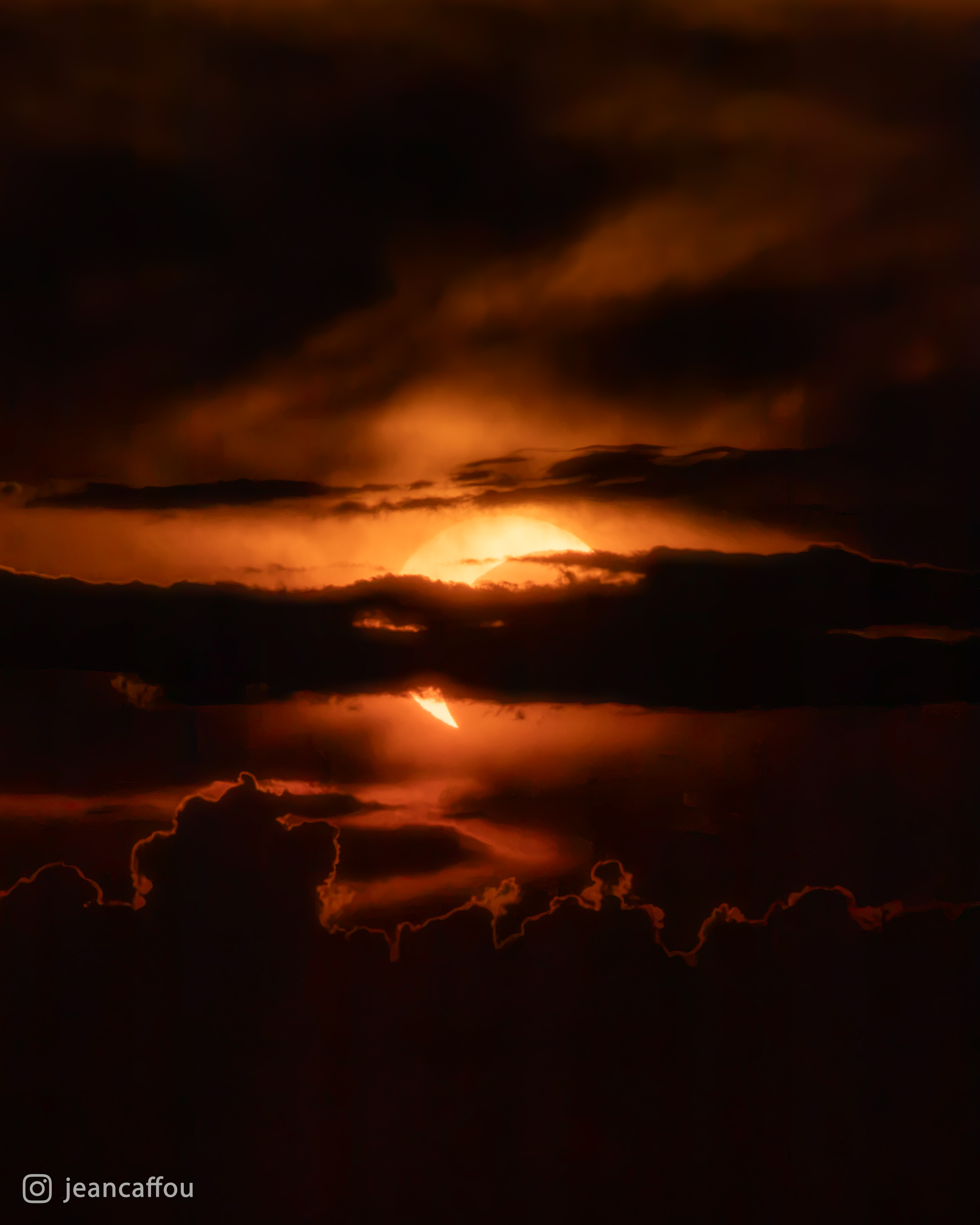
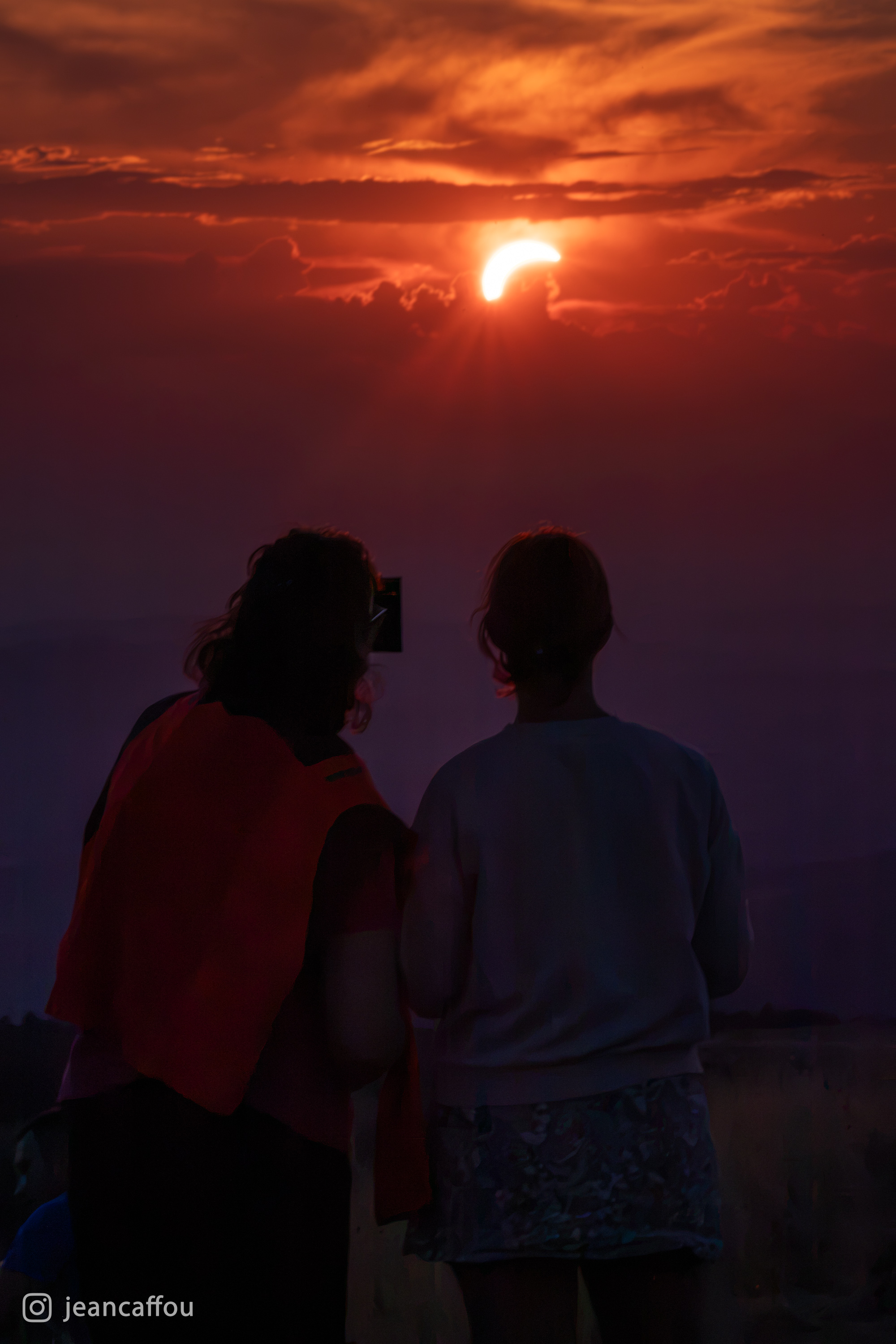
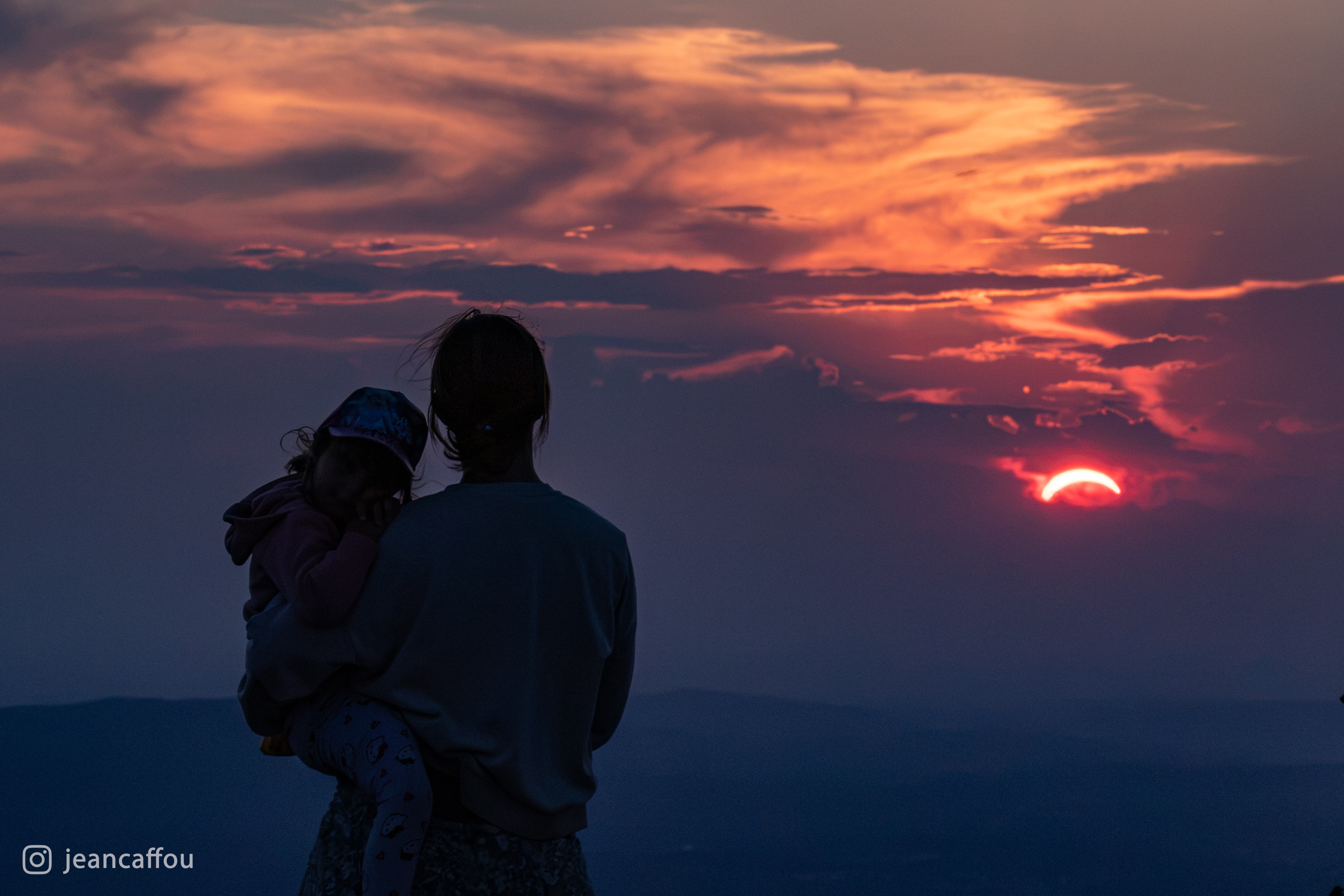
The clouds obscured much of the partial solar eclipse over Slovenia, and for a while it seemed that the best views might stay hidden behind them.
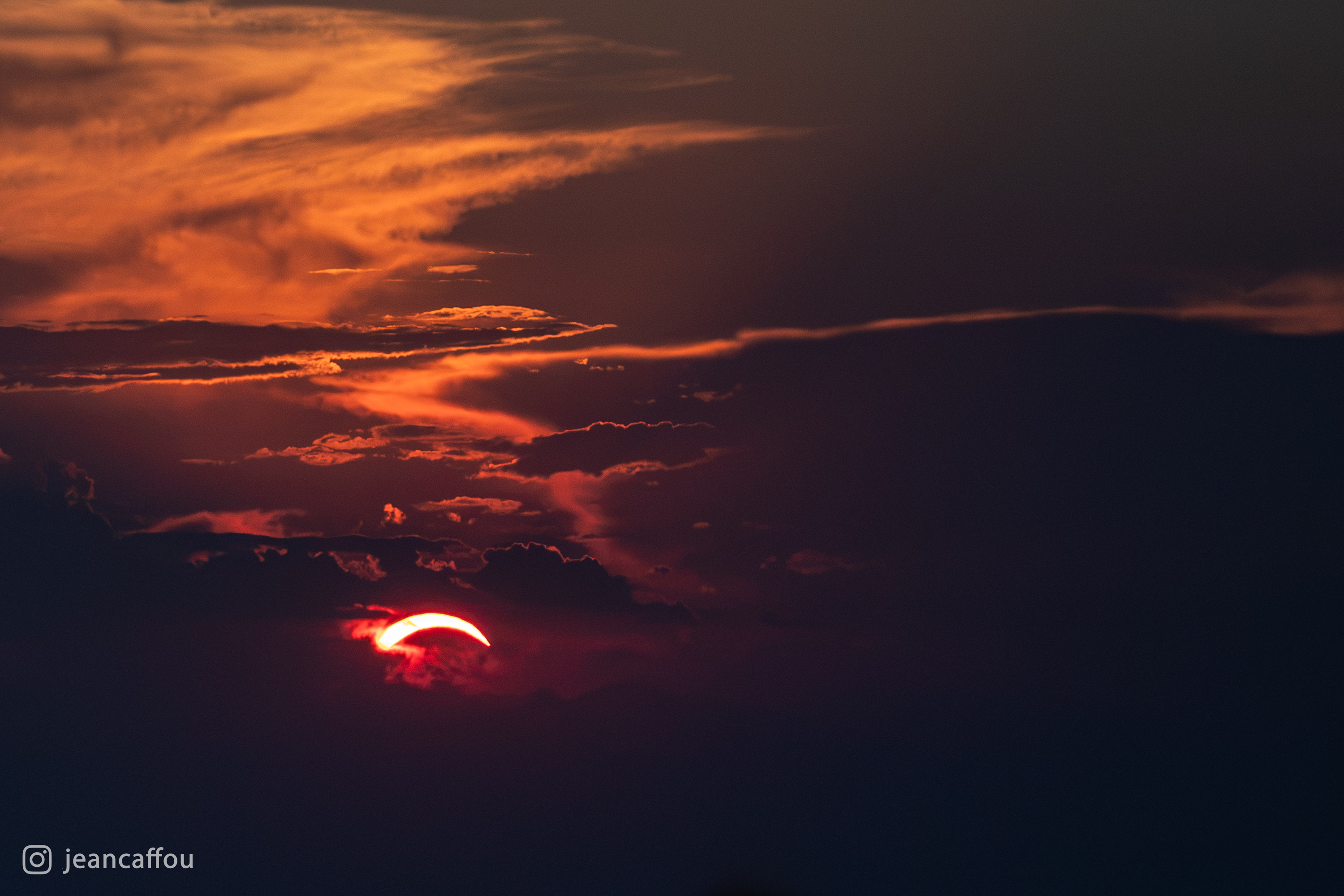
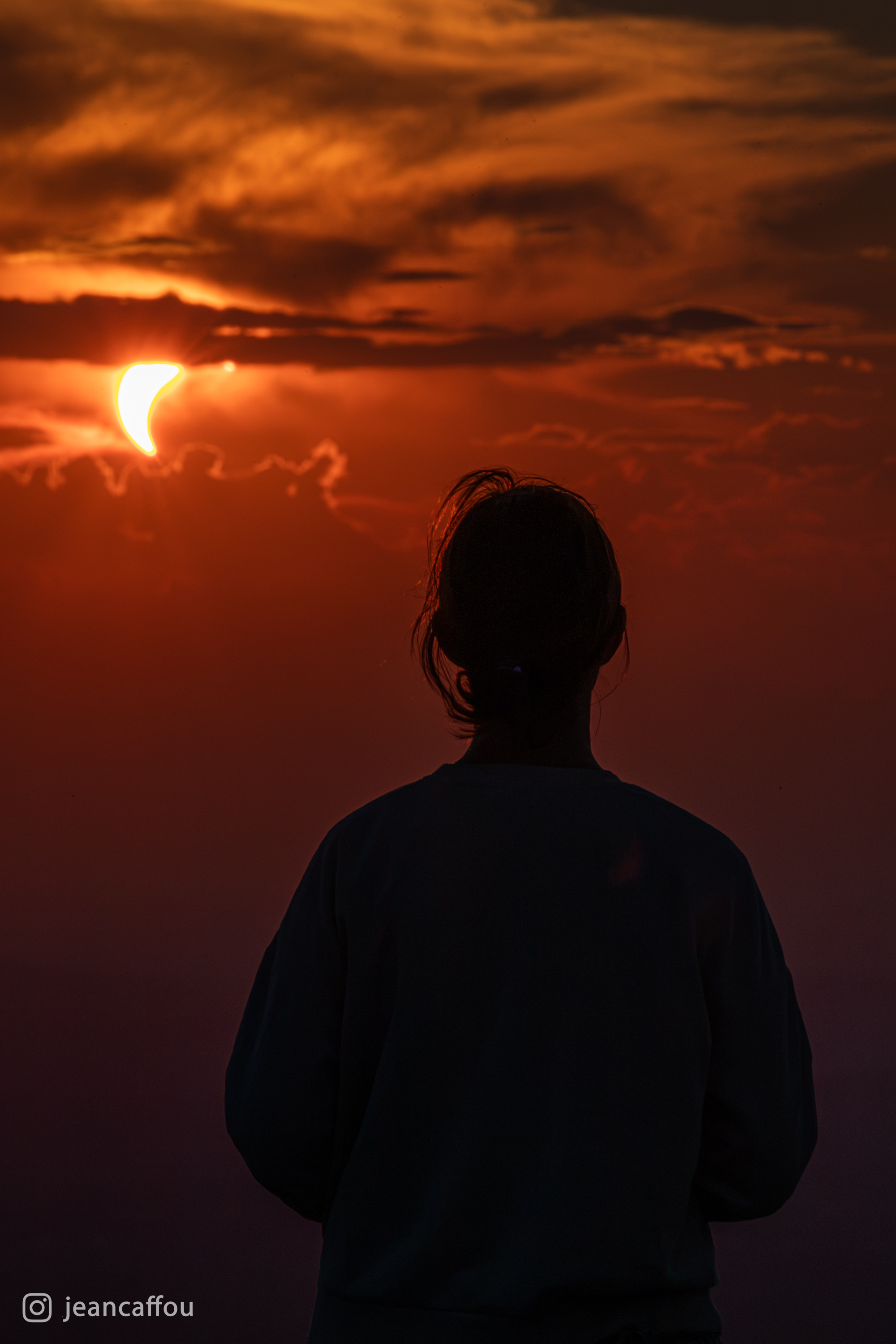
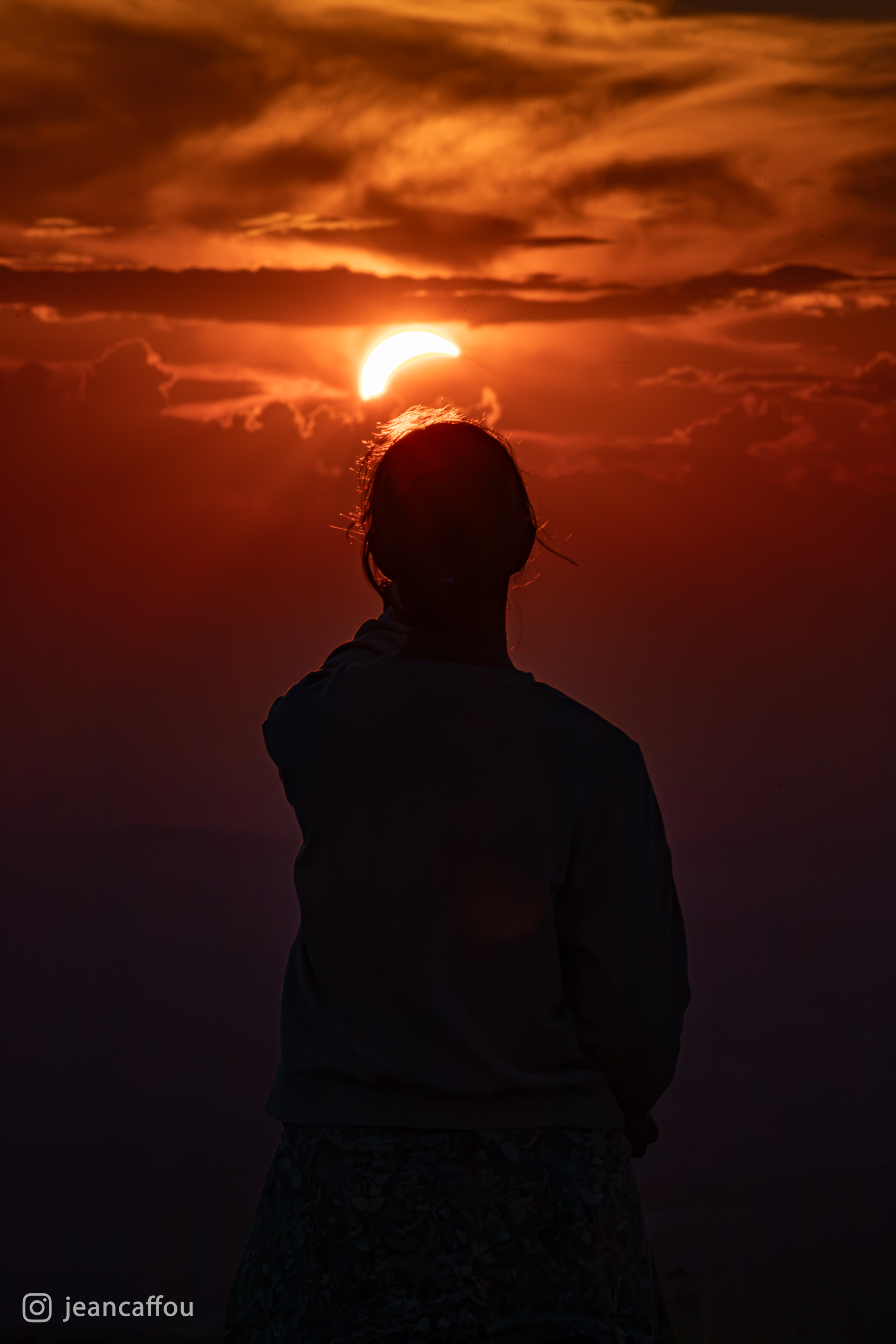
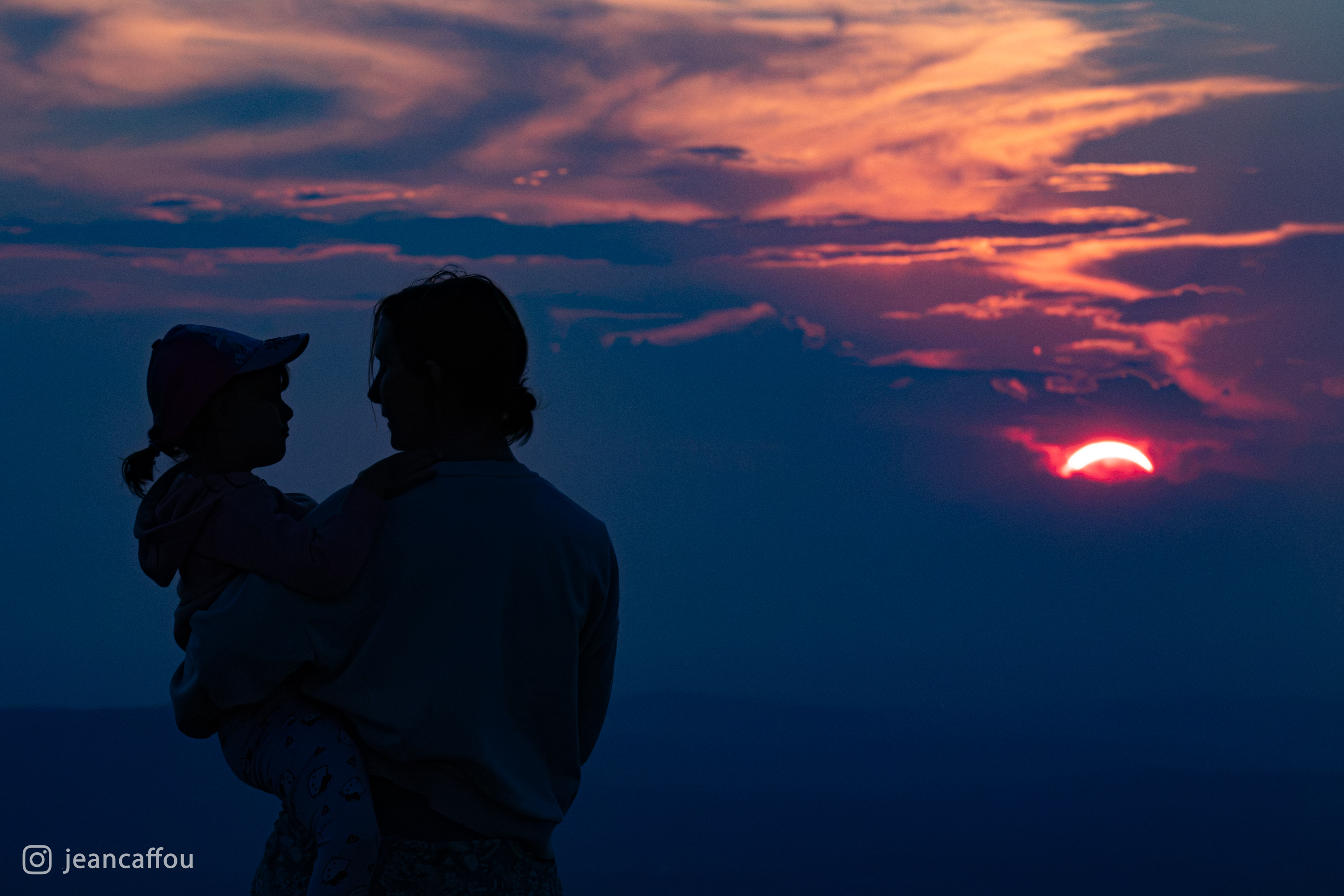
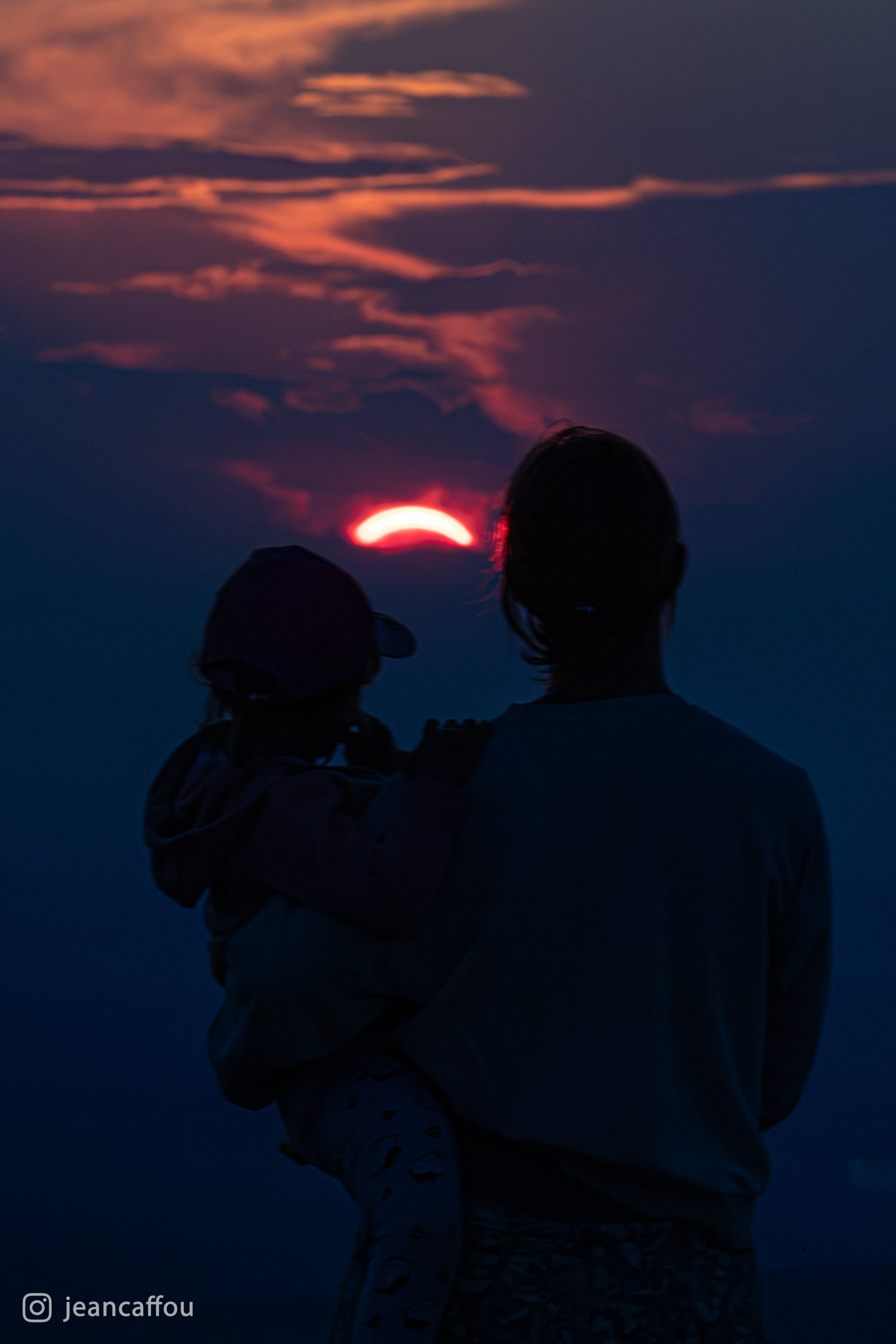
But as the Sun moved closer to the horizon, it finally emerged below the thicker cloud layer. Thin cirrus still stretched across the sky, softening the sunlight and acting as a natural filter. For a few moments, the crescent Sun was clearly visible through the haze, surrounded by the warm colours of the evening sky.
From Slovenia, this was the partial version of a much larger total solar eclipse. In Ljubljana, the Moon first began crossing the solar disc at about 19:26 CEST, when the Sun stood just 7.5° above the WNW horizon. By around 20:12, the eclipse had deepened considerably and the Sun was almost touching the horizon; sunset followed only minutes later, before the eclipse itself had finished.
The extremely low altitude also explains much of the colour in these images. Near sunset, sunlight passes through a far greater thickness of atmosphere, scattering much of the shorter-wavelength blue light and leaving the Sun and surrounding clouds dominated by orange and red tones.
The same eclipse was total farther west and north, along a narrow path crossing Greenland, Iceland and parts of Spain and Portugal. From Slovenia, the geometry left a crescent rather than complete totality.
The clouds made the eclipse harder to photograph, but they also transformed the scene. Instead of a clean astronomical view, we got shifting layers of orange, red and shadow around the crescent.
A very different kind of eclipse view — and probably a more memorable one because of it.
Slovenia, 12 August 2026.