Photo story
Comet Tsuchinshan-ATLAS (C/2023 A3)
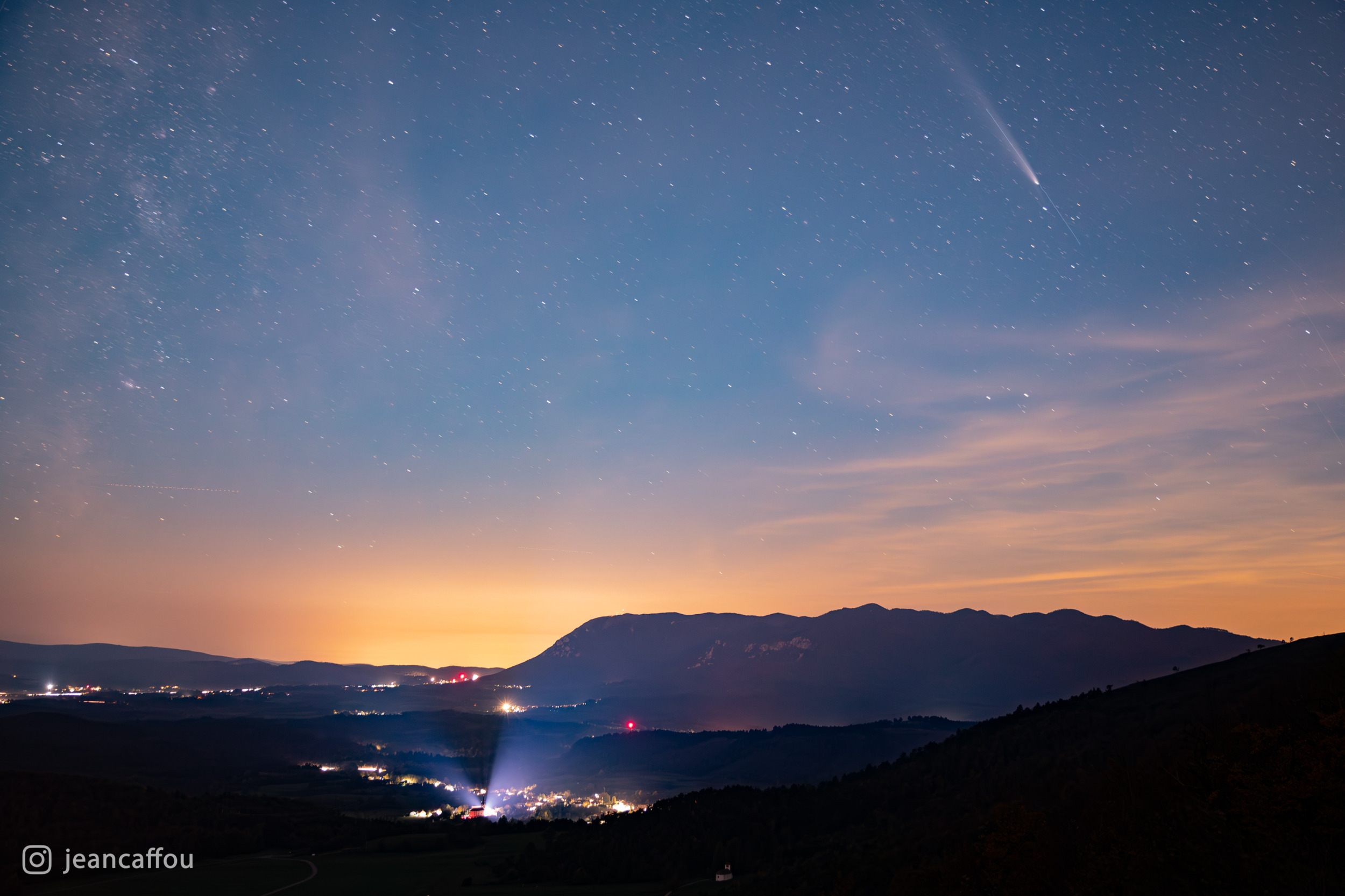
After the monsoon period came three clear days. The peak, when the comet was closest to Earth at 71 million kilometres, or 0.47 AU (47% of the average distance from Earth to the Sun), was in the previous week (12 October 2024). The comet is now moving rapidly away from us and by the end of October 2024 it will already be 1.94 AU, or 290 million kilometres, away.
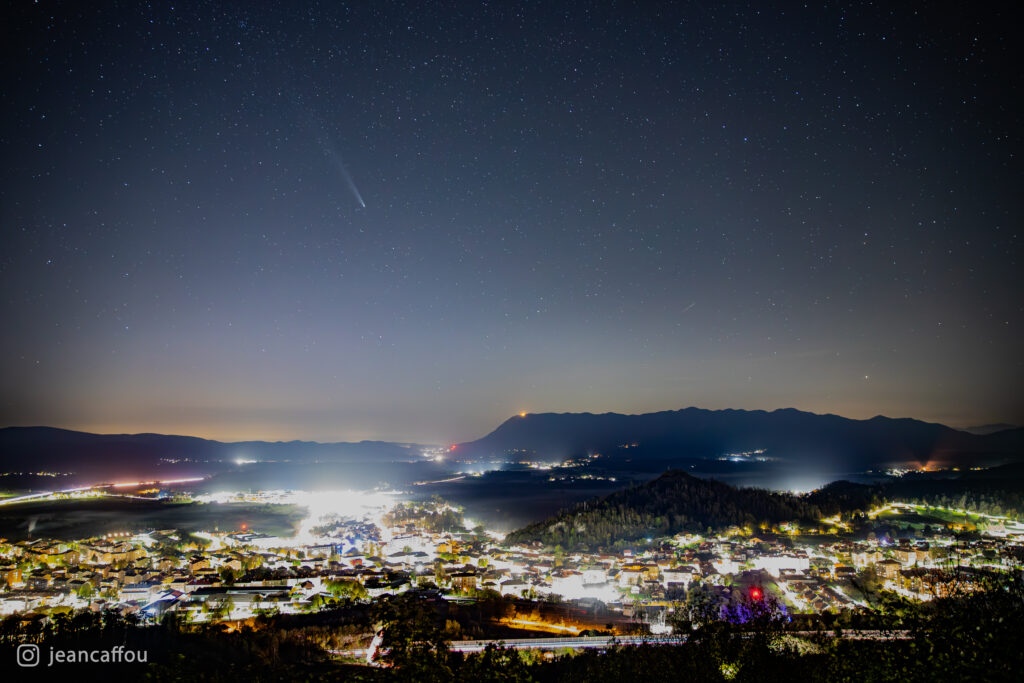
Comet C/2023 A3 Tsuchinshan-ATLAS over Postojna
Over three nights of chasing the comet, I tried from four different locations: Strmca, Zalog (Postojna), Pečna reber and Šilentabor.
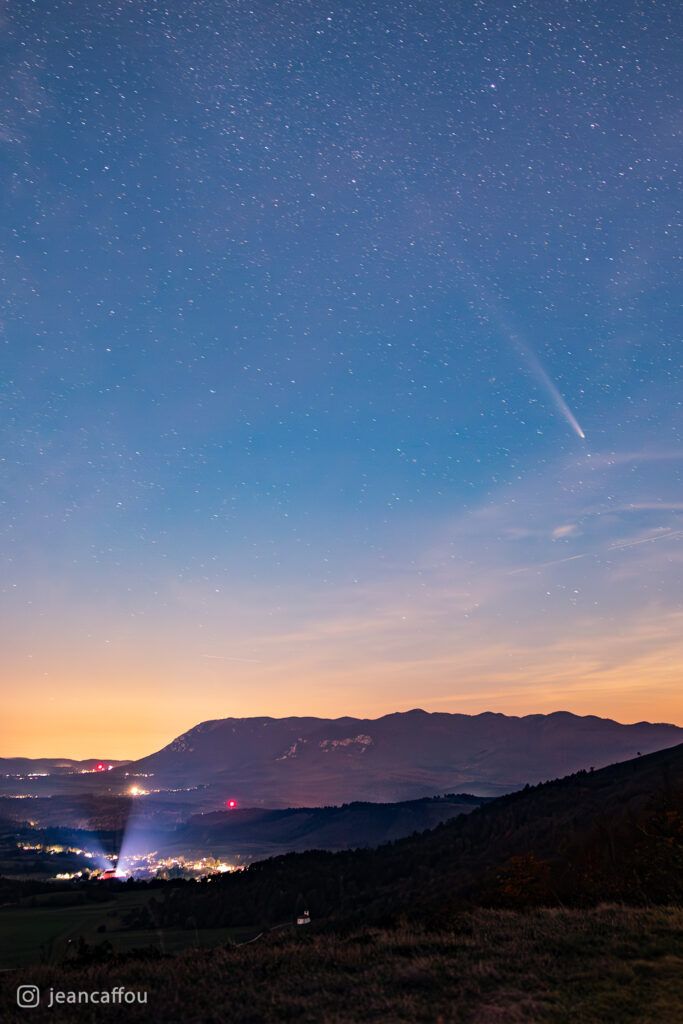
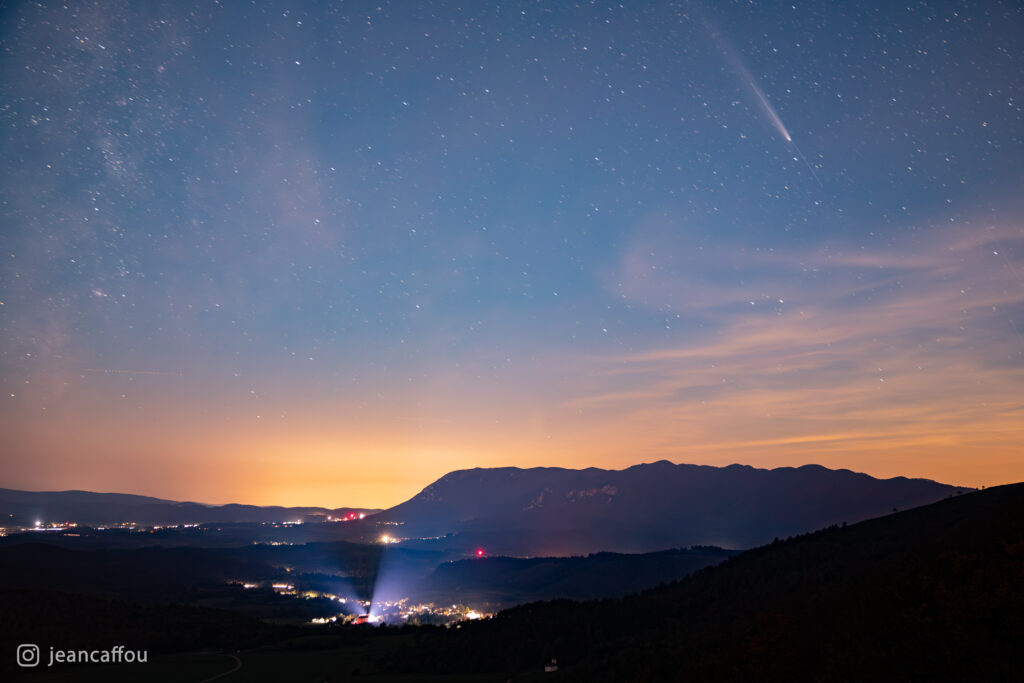
Comet C/2023 A3 Tsuchinshan-ATLAS over Nanos (photographed from Strmca)
The comet is named after the two observatories that first observed it.
- The Purple Mountain Observatory at Zǐjīnshān Tiānwéntái in China (紫金山天文台), and the
- ATLAS system (Asteroid Terrestrial-impact Last Alert System) in South Africa.
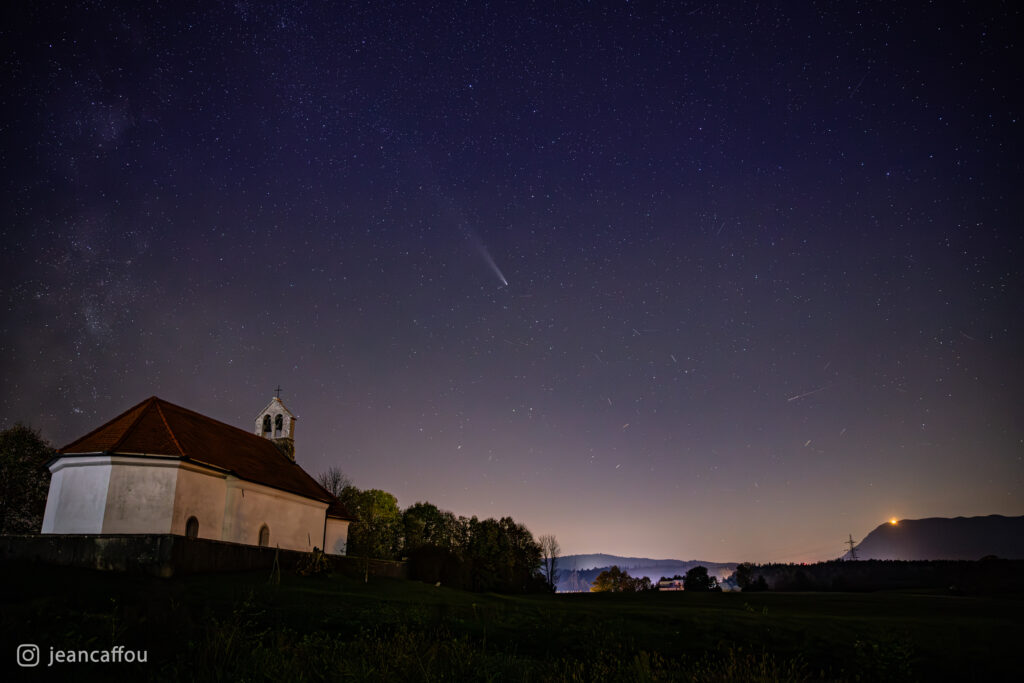
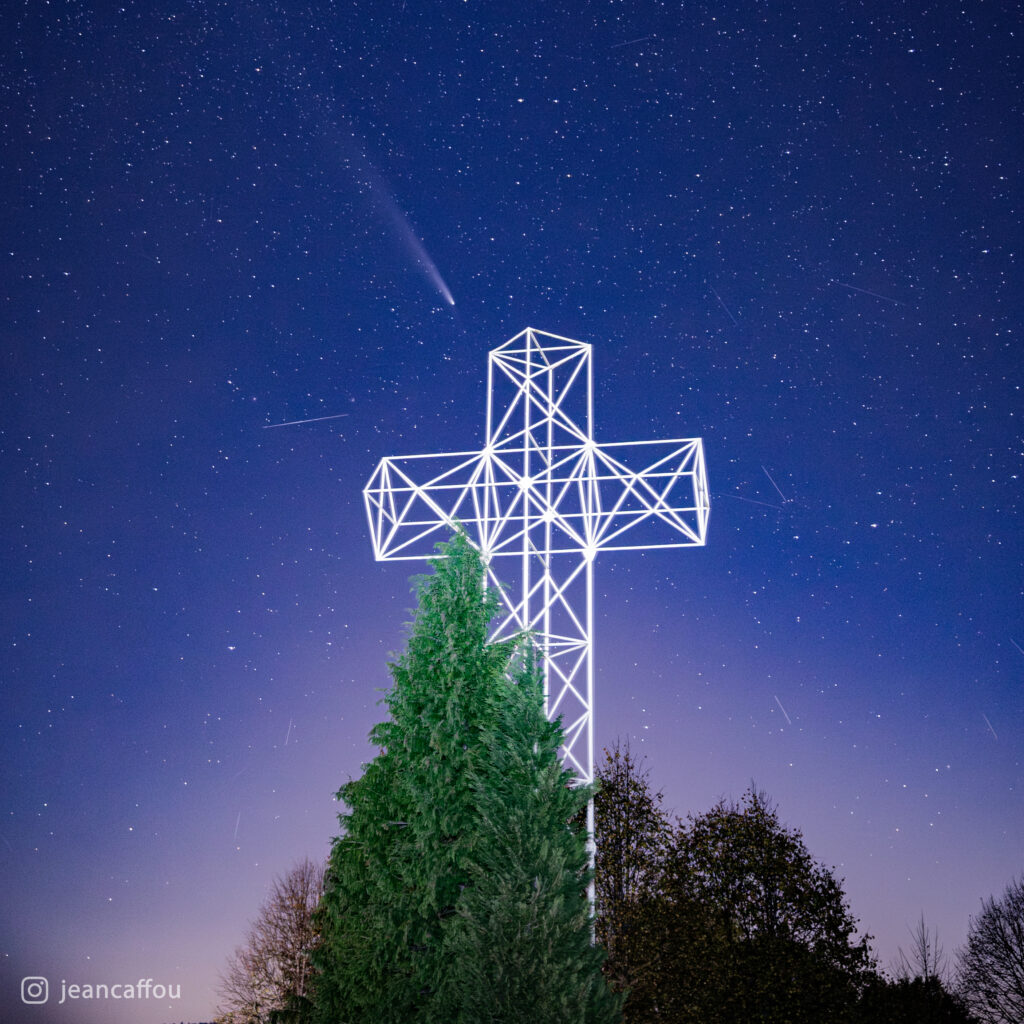
Photographed from Zalog near Postojna (St Daniel's Church)
Comets are made of rock, ice, carbon gases and other dust particles, and range from a few kilometres to tens of kilometres in diameter. Their characteristic tail appears when a comet approaches the Sun and the heat causes the ice in its nucleus to sublimate, creating gas and dust that are dispersed into a tail by the solar wind.
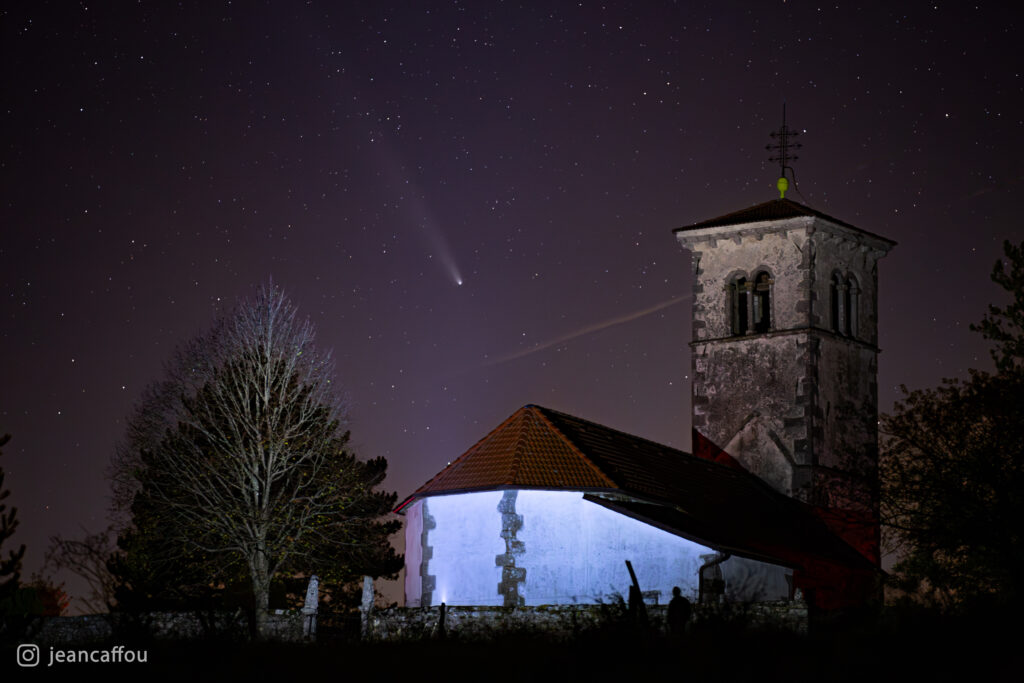
On the third night at Šilentabor (the subject is St Martin's Church), we photographed it together with Matej Blatnik.
Comets have two main types of tail: an ion tail, which consists of charged particles and points directly away from the Sun, and a dust tail, which is wider and more curved because of the particles' lower speed.
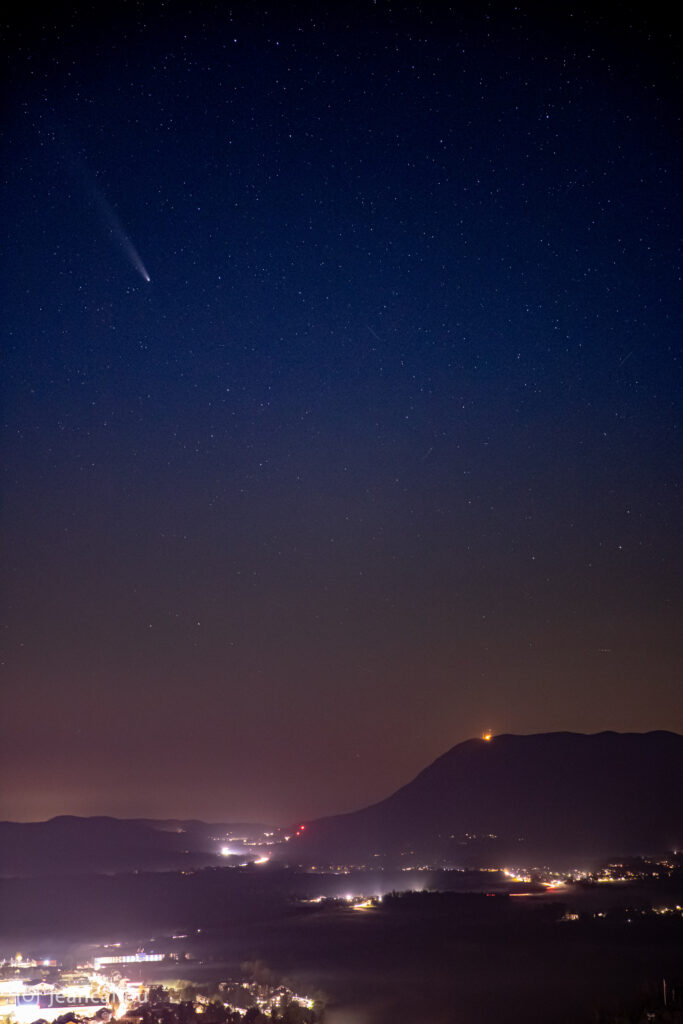
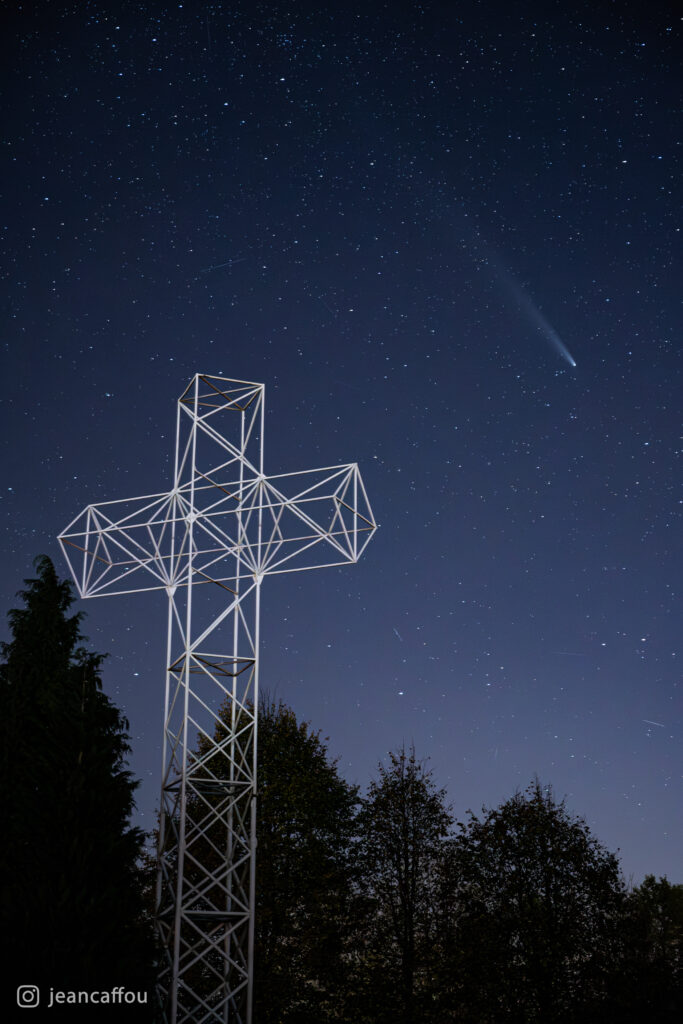
Photographed from Pečna reber (Mladika Lodge)
Claims that the comet has an orbital period of 80,000 years and was last seen by Neanderthals are probably wrong. According to new calculations, the comet will continue on its path around the Sun beyond the Solar System and will not return.
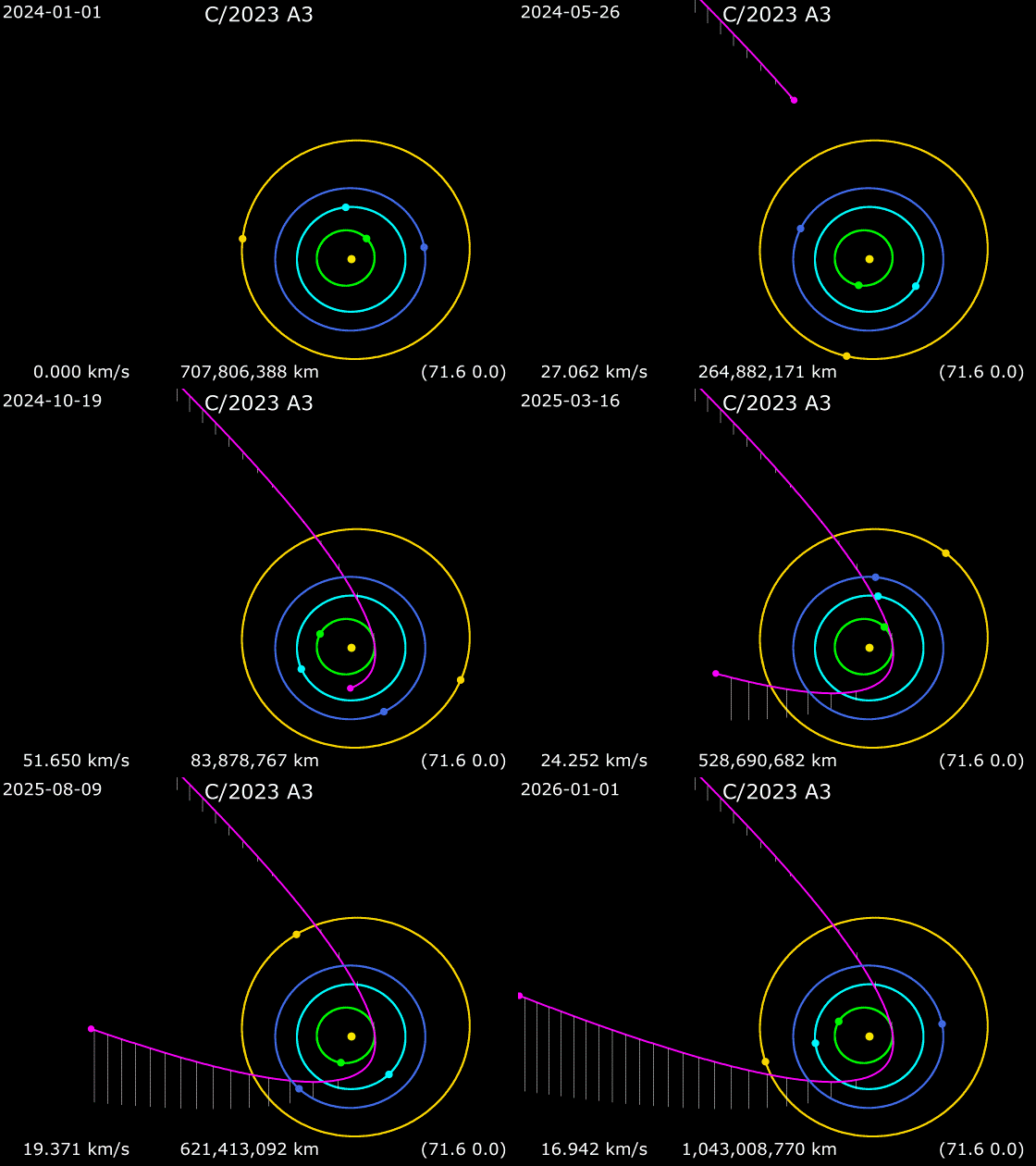
Comets follow very unpredictable paths, so it is difficult to determine their origin and future. Sometimes they do not survive encounters with stars and "evaporate".
Two time-lapse sequences were also made during the photography.